
I hemmed and hawed on writing this detailed Argentina itinerary.
Argentina is immense in size and in diversity. How could I promise that this is the BEST and ULTIMATE itinerary when there are countless options you could pick from.
I don’t believe it’s possible to promise that there is a single perfect Argentina itinerary, so I wrote seven.
Argentina is home to Mendoza’s wine country, metropolitan Buenos Aires, the jungle of Iguazu, the high altitude desert in Salta and rainbow mountains in Jujuy. Patagonia itself has glaciers, penguins, alpine lakes, hikes, and whale watching.
You can’t see it all but you can pick what’s best for you and see that well.
So, keep reading to choose from seven travel itineraries for Argentina.
Pick your adventure.
This post includes seven Argentina 10 day itinerary options with transportation information, hotels, logistics, tour choices I recommend, and up-to-date travel advice for 2026.
QUICK NOTE: This post contains affiliate links and Sol Salute may receive a commission for purchases made through these links, at no extra cost to you.
The Perfect 10 Day Argentina Itinerary
First off, why 10 days in Argentina?
I’m starting with this question because it’s one I spent an embarrassing amount of time agonizing over.
I could easily spend months exploring this country and still have places I want to see left unseen (in fact, I have).
My ideal trip here if visiting from abroad is minimum two weeks in Argentina, but I do recognize (albeit begrudgingly) that paid time off is a limited resource.
10 days in Argentina in much more feasible when you add in one M-F work week with the two weekends on either side.
If you have more time to work with, then stick around. I’ve written each itinerary with optional adjustments that allow you to extend beyond 10 days.
7 The Argentina Itineraries: Jump Straight To It
This article is VERY long and very detailed with 7 detailed Argentina itineraries to choose from, modify, and make your own.
If you want to skip ahead to one in particular that best suits your interests, click on it below:
- The Highlights | Buenos Aires, Iguazu, Mendoza
- Southern Patagonia | El Calafate, El Chalten & Ushuaia
- Northern Patagonia | San Martin de los Andes, Bariloche & El Bolson
- Wine Lovers | Buenos Aires, Mendoza, Salta
- Patagonia Wildlife | Whale Watching & Penguins
- Jungle & Wetlands Wildlife | Iguazu & The Ibera Wetlands
- The Northwest | Salta & Jujuy
Want more personalized itinerary help? If you find this post more overwhelming than helpful, book a call with me for a personalized travel consultation. I’ve lived in Argentina for 16+ years and am a destination expert eager to help you plan the best trip possible for you. Click for more information.
Things to Know Before Planning Your Argentina Itinerary
Here are a few things to know before planning your Argentina vacation.
How Long to Stay in Buenos Aires
It’s nearly guaranteed that your flight into Argentina will arrive and depart from Ezeiza International Airport in Buenos Aires.
So, how long should you spend here and is it really worth seeing? YES.
I know a lot of people use the city only as a jumping off point, particularly if going to Patagonia. But if you can swing the time, there is a lot to see in and around Buenos Aires.
If you love cities, spend at least 3 days here. Otherwise, spend a day here to get your bearings then fly onwards to your next destination.
For tips read my itineraries for 1 day in Buenos Aires and 3 days in Buenos Aires.
International & Domestic Airports
Another reason to stop over in Buenos Aires?
Domestic flights in Buenos Aires depart mainly from Aeroparque in Palermo. International flights depart from Ezeiza, 45 minutes to over an hour outside of town (depending on traffic).
I’ve seen countless people book their flight into Ezeiza and then a flight out of Aeroparque in the same day, sometimes with as little as a few hours between them. This is asking for capital letter STRESS.
Staying at least one night/day in Buenos Aires upon arrival gives you time to get to your connection seamlessly. Don’t be cruel to yourself with a same day airport transfer. It isn’t worth it.
Don’t let an inevitable flight delay or traffic jam ruin your holiday.
Related: How to Get into Buenos Aires from Ezeiza Airport
Are there domestic flights that leave from Ezeiza? Yes, but options are limited. Also, I’ve known airlines to change the departure airport without much advance notice. I wouldn’t rely on it unless you absolutely have to.
How to Get Around Argentina
Flying is the best way to get around Argentina, especially with only ten days.
Overnight and long distance buses used to be the most economical option but that’s not the case anymore.
The main airlines are Aerolíneas Argentinas and Jetsmart. Flybondi is the third and final domestic carrier but avoid them at all cost as they have the highest cancellation rate. Read more: What airlines to trust in Argentina
It can be hard to find flights to connect cities in Argentina that don’t involve a layover in Buenos Aires or Cordoba.
It can take some creativity and work arounds to make a long itinerary work, logistically.
Read more in this guide about getting around Argentina to help plan the logistics of your Argentina itinerary.
Do you need to rent a car in Argentina?
You definitely don’t have to rent a car.
With guided tours, taxis and private drivers you can do just about everything.
That said, this IS a beautiful country with so many beautiful Argentina road trip routes.
Renting a car (check rates here) is a great way to see this country. Fly between major destinations (Buenos Aires to Mendoza or to Patagonia) and rent a car in each destination.
Long distance road trips to cross the country are not feasible both due to distance and Argentine rental companies. There is no real nationwide agency to allow long distance drop offs.
Even Hertz offices are franchises with individual owners. It is nearly impossible to rent a car in one city and return it across the country (they’ll charge you for a person to fly to pick it and drive it back).
10 Days in Argentina: 7 Options for the Best Argentina Itinerary
It is impossible to write ONE “best Argentina itinerary,” so I wrote 7.
Argentina is a huge country with regions that greatly differ from one another. There’s something for everyone here.
The Argentina itineraries in the article each highlight a specific region or interest like wine travel, Patagonia, or wildlife.
Pick one and customize it to make it your own.


1. The Highlights Itinerary: Buenos Aires + Iguazu + Mendoza
This Argentina 10 day itinerary hits up three major highlights: Buenos Aires, Iguazu Falls, and Mendoza.
- Days 1-3: Buenos Aires – City, Steak, & Tango
- Day 4: Flight to Iguazu, view the falls
- Day 5: Day trip to Brazil’s side of the falls
- Day 6: Flight to Mendoza from Iguazu
- Day 7: Full day wine tour of the Uco Valley or Lujan de Cuyo
- Day 8: Alta Montaña Tour into the Andes
- Day 9: More wine tasting, hot springs, or white water rafting in Mendoza
- Day 10: Fly home via Buenos Aires or direct from Mendoza
The Highlights Itinerary Details
What follows is a day by day breakdown of this Argentina in 10 days itinerary.
Of course, it’s meant a suggestion or framework for you to build your own activities off of (as we all have very unique taste!)
Maybe you want more wine and less mountains in Mendoza. Maybe you want less time in Iguazu and an extra day in the city. Take what follows and make it your own.
But as it is written this is a great Argentina itinerary.
Bueno, vamos!
3 Days in Buenos Aires
All major international flights arrive and depart from Buenos Aires, so once you land, stay a while!
This itinerary starts with three days (four nights) in Buenos Aires. For a more detailed itinerary, here’s my 3 days in Buenos Aires itinerary, exactly as I did it with my best friend when she visited.
Your flight most likely lands mid-morning and your transfer from Ezeiza will get you to your hotel just in time for a late lunch.
I always recommend spending this first afternoon relaxing in Palermo Soho.
You’ll be tired from the overnight flight so go for a late lunch and people watch from the charming cafes, see the street art, and window (or really) shop.
You can also hop in a taxi and head over the Bosques de Palermo parks to unwind in the city’s version of Central Park.
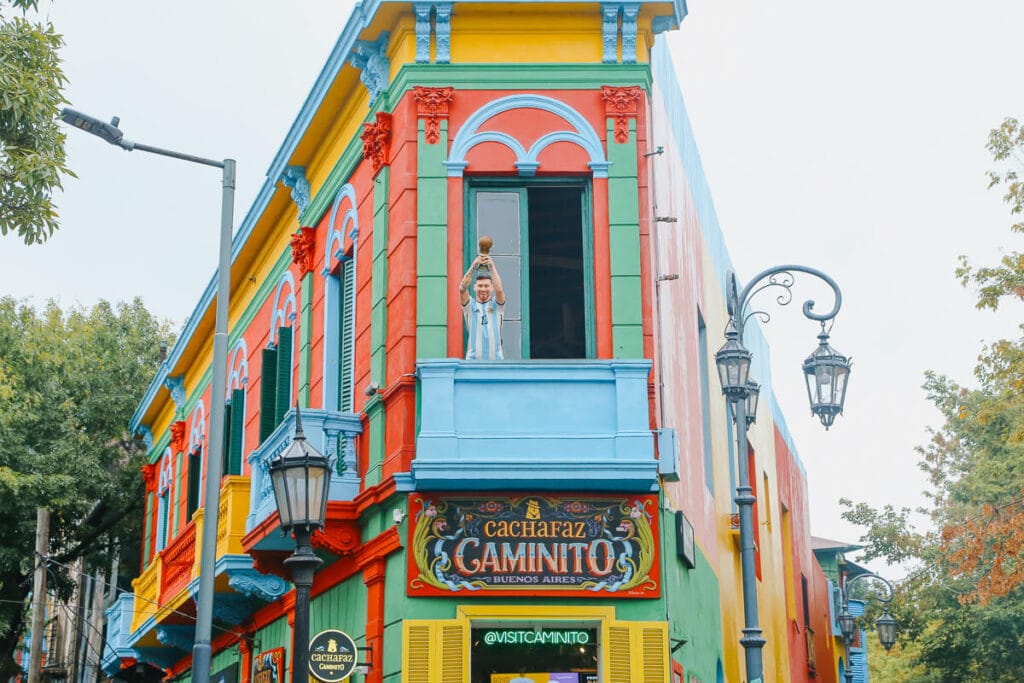
On day 2, your first full day, take a tour like one of these food tours or a walking tour to get acquainted with the city.
Choose your own adventure in the afternoon: visit the Recoleta Cemetery, wander La Boca, or see Puerto Madero. At night, go to a tango show.
On day 3, if you’re visiting on a weekend, make sure you save Sunday for the San Telmo Market.
From here you can either stay one more night in Buenos Aires (and eat at one of the best steakhouses or try my favorite cooking class) or get a late flight into Iguazu for your next stop.

2 days in Iguazu
Day four and you’re in Iguazu! Whether you flew in from Buenos Aires to Iguazu Falls last night or this morning, welcome to the jungle!
This is Argentina’s rainforest.
Some itineraries include a fly-by one day stop here. That is simply not enough time to see this natural wonder.
For more information, read my complete guide to Iguazu Falls.
I recommend booking the earliest flight possible so you can spend the day at the falls, right off the bat.
You can even save time by having your hotel arrange a taxi so they can bring you straight to the falls and then bring your luggage to the hotel (or you can store it in a luggage locker at the park). The airport is closer to the falls, going to the hotel first will require doubling back.
BUDGET TIP | If you plan on going to the Argentine park twice, make sure you return on the next consecutive day to get 50% off your second entrance.
Spend your second day in Brazil seeing Iguazu Falls from their perspective. The views from Brazil’s side of Iguazu are panoramic and vastly different than Argentina’s side.
🇧🇷 First, check to see if you need a visa, at the moment US, Canadian, and Australian citizens do need a visa to visit Brazil. If you’d prefer not to get a visa for this one day, then you can visit Argentina’s side again or head to Mendoza early.
To get to Brazil’s side, you can take a guided tour, the bus or hire a private driver.
If you’d prefer to skip Brazil’s side of the falls and stay in Argentina, take this day trip to the Wanda Mines and San Ignacio Mini ruins, spend a second day at the falls, or relax at your hotel’s beautiful pool with a caipirinha.
4 Days in Mendoza
On day 7, fly from Iguazu to Mendoza.
Spend your first day settling in.
If you’re staying in the city, walk through the plazas and Parque San Martin.
If you’re staying on a vineyard (my favorite option), then welcome to paradise.
Spend your first full day in Mendoza on day of wine tastings in the region’s famous vineyards.
I highly recommend a private driver in the Uco Valley. This region is closest the Andes and produces the highest quality wines and offers the most stunning vistas.
If you’re traveling solo and would prefer a tour group, I recommend this small group tour.
With your second day in Mendoza, head into the mountains to see one of the world’s tallest peaks, Aconcagua.
This guided tour is one of the most popular non-wine excursions in Mendoza.
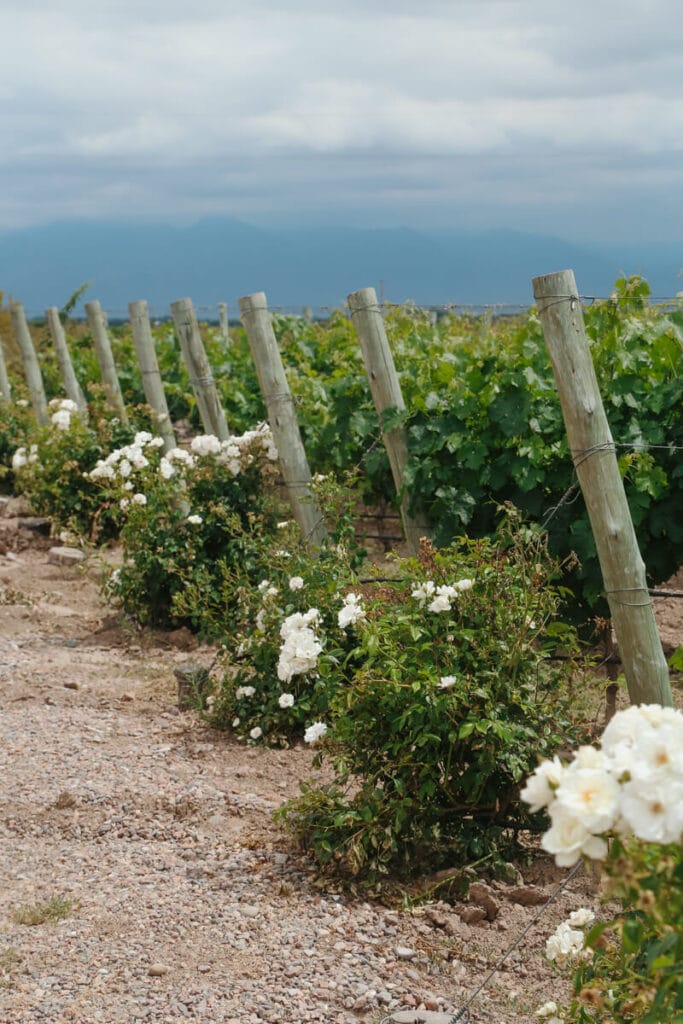

For a third day in Mendoza, I would do another day of wine tasting. If you already went to the Uco Valley, then explore Lujan de Cuyo’s world class bodegas. You can get around via driver again or with taxis/cabify (this area is much closer to the city).
If you’d rather not do more wine, you can relax in the Cachueta Hot Springs or get adventurous in Potrerillos.
And that’s a wrap.
Unfortunately, your ten days in Argentina exploring the country’s highlights have come to an end.
On your last day, do whatever you can to enjoy your final morning in Mendoza then make your way back to Buenos Aires for the flight home or further travels. Another route is to fly from Mendoza to Santiago de Chile and fly home from there.
With more time you can explore Buenos Aires for a couple more days or see Santiago.
To plan better, here are my guides on Mendoza & Iguazu:
- Things to do in Mendoza
- The Best Wineries in Mendoza
- Where to Stay in Mendoza
- A Practical Guide to Iguazu Falls, Argentina Side
- A Practical Guide to Iguazu Falls, Brazil Side
- Where to Stay in Iguazu Falls
The Highlights Itinerary Logistics
Where to Stay: Hotels for This Itinerary
Buenos Aires Hotels
- Home Hotel, Palermo Hollywood
- BE Escondido by Coppola, Palermo Soho
- Best Hostel in BA
Iguazu Hotels
- The Gran Meliá Iguazú – This is a splurge but worth it if you can swing it. It’s located INSIDE the national park allowing you to see the falls without crowds and come and go from the park throughout the day.
- Iguazu Loi Suites – Tree house vibes near town for a unique jungle experience
- Iguazu Falls Hostel
Mendoza Hotels
- Casa de Huéspedes La Azul – If you want to stay on a vineyard, this is the guesthouse of my favorite family-owned bodega in the Uco Valley
- B&B Plaza Italia – Comfortable B&B in town if you prefer to stay in the city, we stayed here once and it’s great for couples
- Lares de Chacras – Split the difference of the Uco Valley and downtown by staying in charming Chacras de Coria in the Lujan de Cuyo wine region, just twenty minutes from downtown (easy to reach without a car, but still close to wine).
What time of year is best to do this itinerary?
This Argentina itinerary is great year-round. All three destinations are great in summer (but very hot). Expect humidity in the summer in Buenos Aires and Iguazu, but enjoy the dry desert heat in Mendoza.
Winters are mild and perfect in Iguazu. Nights will be cold but days will be sunny and warmer in Mendoza.
Spring and fall is perfect for all three destinations.
What to pack for this itinerary?
Buenos Aires is a casual city and you don’t need to pack particularly nice clothes just to go out here. Jeans and a nice top will be enough for a night out.
Comfortable, flexible shoes like a nice pair of sandals in summer or boots for winter will go a long way in Buenos Aires and Mendoza.
For Iguazu, dress in clothes than can dry quickly like my favorite hiking pants. They’re great for the outdoors but also do well in the city. Wear non-slip shoes in Iguazu for the metal pathways, like these Teva sandals or sneakers and don’t forget sunscreen, bug spray, and a hat to protect yourself from the sun.


2. Southern Patagonia: Perito Moreno + El Chalten + Ushuaia
This 10 days in Patagonia itinerary is a very popular route used by local and foreign tourists alike.
Buenos Aires to El Calafate to Ushuaia, then back to Buenos Aires is a regularly used flight route offered by Aerolíneas Argentinas and makes for a comprehensive southern Patagonia itinerary.
- Day 1: Arrive in Buenos Aires, go on afternoon tour
- Day 2: Fly to El Calafate, See Laguna Nimez, Eat Patagonian Lamb
- Day 3: See Perito Moreno
- Day 4: Transfer to El Chalten, Go on short hike
- Day 5: Hike
- Day 6: Hike
- Day 7: Transfer back to El Calafate, fly to Ushuaia
- Day 8: Morning hike to Laguna Esmeralda, Afternoon Beagle Channel Excursion
- Day 9: Explore Tierra del Fuego National Park (or, alternatively, choose excursion to see penguins & an estancia)
- Day 10: Fly back to Buenos Aires to stay or transfer home
SOUTHERN PATAGONIA ITINERARY ALTERNATIVES/ADD-ONS | This itinerary covers a LOT of ground in southern Patagonia, leaving nearly no time for Buenos Aires. If you have more than ten days, I recommend adding on at at least one more day in Buenos Aires and then adding onto Ushuaia.
Southern Patagonia Itinerary Details
Here’s a day by day of this 10 days in Patagonia itinerary.
Arrival + 1 Night in Buenos Aires
Welcome to your ten days in Argentina!
You’ve arrived in Buenos Aires.
I recommend staying at least a night in the city rather than rushing to a connecting flight to El Calafate.
It’s most likely that your flight from Buenos Aires to El Calafate departs from Aeroparque, the domestic airport in Palermo. Transferring there from Ezeiza can be stressful if your connection time is short and you’ll be tired from your long night of travel to get here.
You’ll probably arrive to your hotel around midday so spend the afternoon going on a city tour like this.
For your only dinner in Buenos Aires, treat yourself to the city’s best steak at Fogon Asado or one of the many other excellent steakhouses in Buenos Aires.
2 Days in El Calafate
On your second day, fly to El Calafate. If your flight is early enough, take full advantage of your first day here.
Spend the afternoon walking the trail in the Laguna Nimez Reserve.
This beautiful nature reserve is right in town and you’ll see a lot of native birds (including flamingos!).
It’s been a bit of a whirlwind to get here, with non-stop travel and touring since you left home, so take it easy today.
Grab an afternoon ice cream at Acuarela, famous for their calafate berry ice cream, or get calafate berry alfajores at the local bakery Dulce Lugar.
Or… get both, they’re only a few blocks apart.
For your first Patagonian dinner, do it right with Patagonian Lamb. Don Pichon has the best lamb in town, so run, don’t walk, there for dinner.
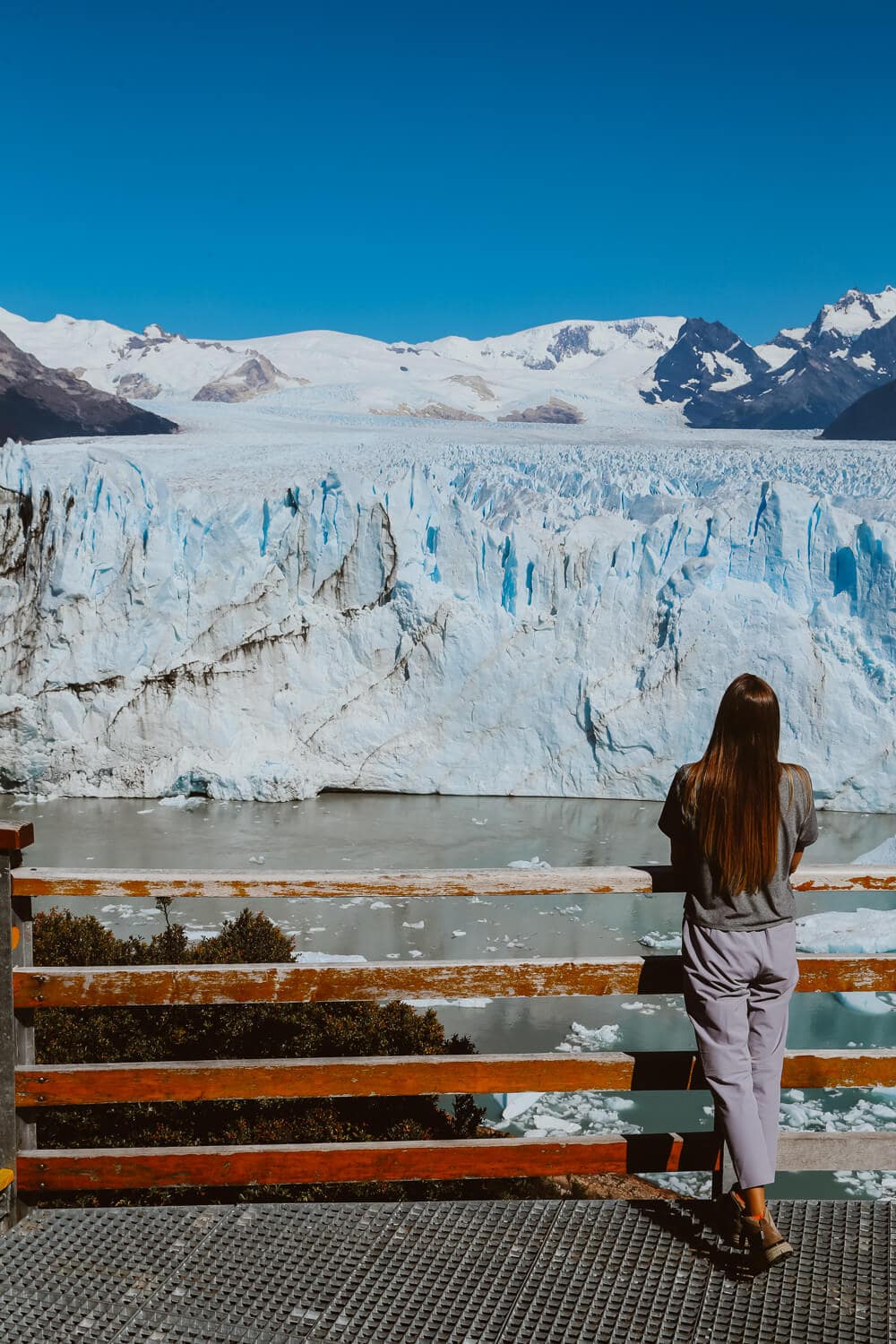

For your third day (and first full day in El Calafate), go see the star of the show: Perito Moreno.
There are a lot of ways to see it so I wrote a complete guide to Perito Moreno to help you out (very helpful if you want to go without a tour).
If you’d prefer a tour, here are the best:
- Big Ice Trekking – The ultimate way to see the glacier? Hike across it. I did this on my first visit and it was incredible.
- Minitrekking – A shorter version of the Big Ice Trek, better for those looking for a less intensive trek.
- Kayak – You can kayak among the ice bergs and see Perito Moreno right from the water
- Guided Tour – Or skip the sports activities and go on a guided tour of the park
EL CALAFATE ALTERNATIVES/ADD-ONS | If you have the time to spend a second full day in El Calafate, I recommend either going on the Todo Glaciares Excursion to see MORE stunning glaciers or spend a day at Nibepo Aike, a traditional Patagonian estancia.
3 Days in El Chalten
Get an early morning bus or shared transfer to El Chalten.
Half-way between the two cities is a rest stop called La Leona.
Butch Cassidy and the Sundance Kid stayed here for a while when in Patagonia (and the place is basically a museum for the outlaws).
After La Leona the views of the mountains as you approach El Chalten are breathtaking.

If you arrive in El Chalten with enough time, take an introductory hike to welcome yourself to Argentina’s hiking capital.
Los Condores/Aguilas is a short, easy hike offering a panoramic view of the city and mountains (great for sundown if the weather is nice).
This itinerary includes two full days for hiking in El Chalten.
If you do only one hike, make it Laguna de los Tres (Fitz Roy). It is the most iconic hike in the region (and possibly the country).
Check the forecast and try to do it on a clear day so clouds don’t cover the mountain.
Laguna Torre is the other must-do full-day hike here. If you have the energy to do both (and it’s A LOT), I recommend those two hikes.
If you need a shorter hike, you can do Laguna Capri instead of Laguna de los Tres or Laguna y Glacier Huemul in nearby Lago del Desierto.
Read More: A Complete Guide to Hiking El Chalten
EL CHALTEN ALTERNATIVES/ADD-ONS | If you have any extra days to add on to this itinerary and you love hiking, ADD THEM HERE. There is no such thing as too much time in El Chalten if you love hiking. We were there for 6 days. I could have stayed for twice that.
4 Days in Ushuaia
In full honesty, your “first day in Ushuaia” on this Patagonia Itinerary is mainly a travel day.
Wake up early and transfer back to El Calafate for your flight to Ushuaia.
Have dinner at either Volver, Tia Elvira, or El Viejo Marino (all three are located directly on the waterfront) to try centolla (king crab), Ushuaia’s specialty.
If you arrive in Ushuaia with enough time to spare, walk around the water front and admire the cruises taking lucky passengers to Antarctica (if you have tons of time and the budget for it, get a last minute deal and join them!).
Another option for arrival day is visiting the prison museum which is very interesting.
On your first full day in Ushuaia, explore Tierra del Fuego National Park.
There are moderate hikes here like Senda La Costera or short treks around the Lapataia Bay area that offer breathtaking views for minimal effort.
To get to the park, you can take a taxi (it’s very close to the city) or for a more packaged tour experience (and less hiking) take the famous End of the World Train.
If penguins are on your bucket list, you can instead take this tour to see penguins and Estancia Harberton.
Have dinner at Ramos Generales El Almacén or Paso Garibaldi Restobar.
You May Also Like: Where to See Penguins in Argentina

On your second full day in Ushuaia, put your hiking boots back on and leave early to hike Laguna Esmeralda, the city’s most popular trail. If you want a hike with less crowds, hike Laguna Turquesa instead.
It’s a moderate trek and around 4-5 hours total (or more if you want to spend more time relaxing at the laguna like I did).
Then spend your afternoon on this Beagle Channel Excursion. You’ll see the famous red and white lighthouse and sea lions.
The afternoon boat leaves at around 3, allowing plenty of time for your morning hike.
On your fourth and final day in Ushuaia and Patagonia, say goodbye with a breakfast at Ramos Generales El Almacén (yes, go there again!).
The baked goods here are spectacular and you’ll have a more peaceful experience than a busy lunch or dinner.
Catch your flight back to Buenos Aires to explore the city or transfer to your flight home.
Southern Patagonia Itinerary Logistics
Where to Stay: Hotels for This Itinerary
Buenos Aires Hotels
- Home Hotel, Palermo Hollywood
- BE Escondido by Coppola, Palermo Soho
El Calafate Hotels
- Hostel America del Sur – Budget, this is my favorite hostel in El Calafate, unbeatable
- Boutique Hotel – Mid Range hotel in town with a beautiful view of the lake
- Estancia Nibepo Aike – The splurge, stay at this historic estancia outside town inside the national park
El Chalten Hotels
- Chalten Camp – Luxury glamping
- Chalten Apartment – Where to stay to have a kitchen/living room to relax in
- Hostel – El Chalten budget accommodation
Ushuaia Hotels
- La Posta Apart – Apart hotel, we stayed here to have a full apartment on a budget
- Albatros Hotel – Waterfront hotel walking distance to everything in town.
- Arakur – Luxury, best hotel in Ushuaia
What time of year is best to do this itinerary?
The best time of year to explore Southern Patagonia is in the summer for good weather and long days.
Summer is from Dec-Feb, but keep in mind that January is Argentina’s busiest month. If you travel then, book ALL hotels, tours, and rental cars as far in advance as possible.
Late Spring (late Oct-Nov) and early Fall (March-mid April) are great shoulder seasons. May is the trickiest month when a lot of hotels and restaurants close for repairs. May isn’t impossible but you may see some places listed as “temporarily closed.”
Winters will be too harsh for Southern Patagonia unless you want winter sports. Ushuaia has its own ski resort and plenty of winter activities.
What to pack for this itinerary?
For hiking in Southern Patagonia, pack your best hiking boots and hiking poles (we have this cheap pair that work wonders).
For clothing, pack layers. You’ll peel them off as the days get hot on the trail in El Chalten. Include a hat, a good jacket (this area is notoriously windy), sunglasses, plenty of sunscreen, and a light fleece. In summer you don’t need a base layer.
The weather and wind in Southern Patagonia is volatile. It could snow at any time of the year and the wind can be extreme. Pack layers just to be safe.
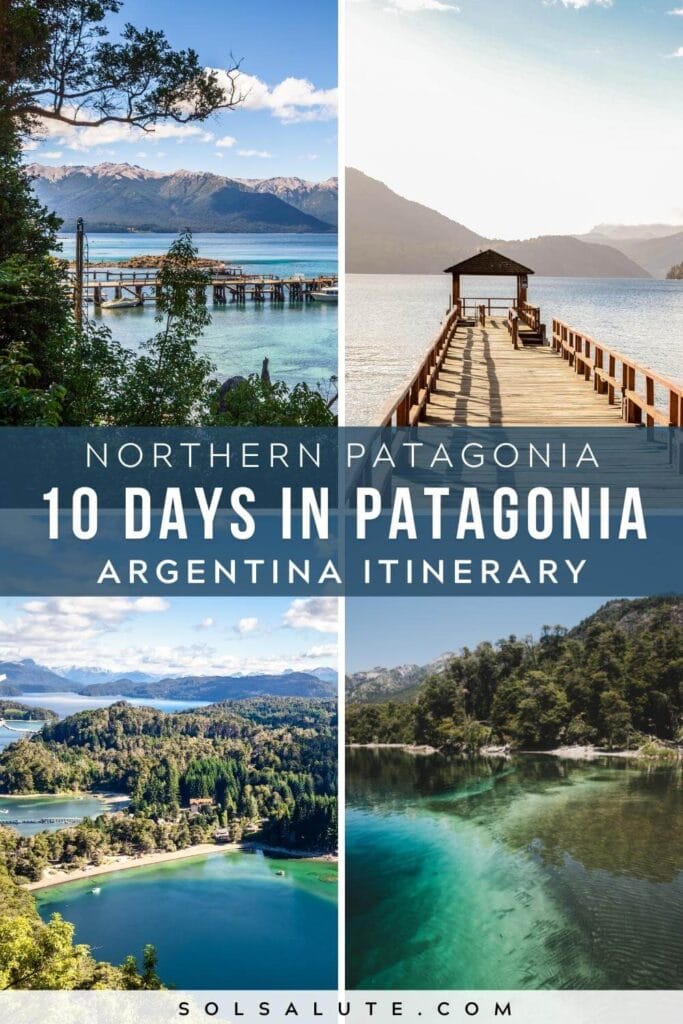
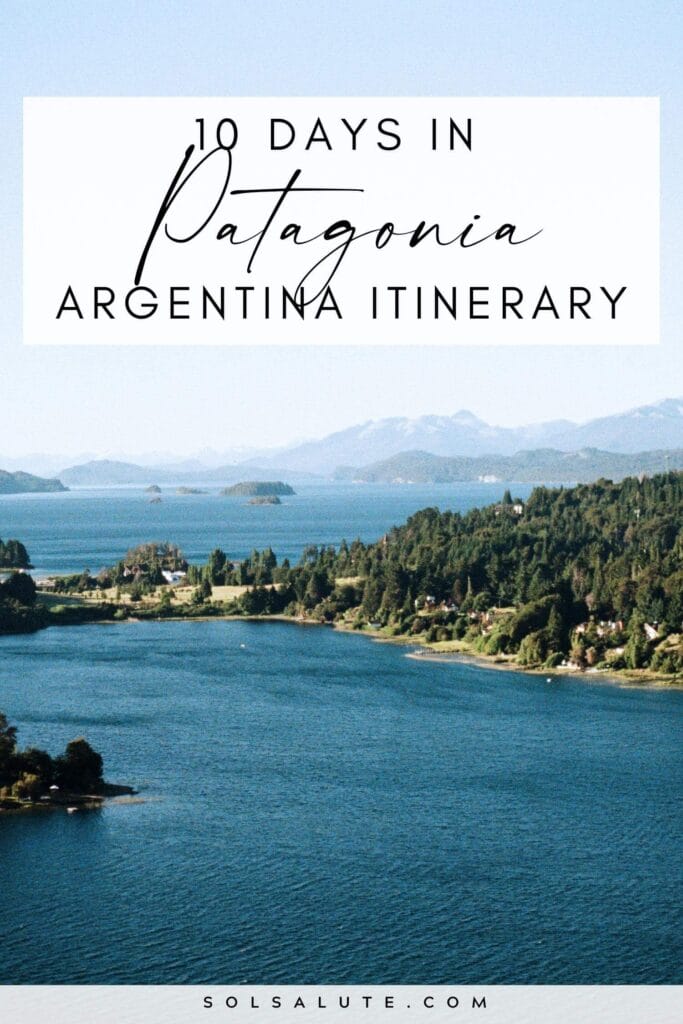
3. Northern Patagonia Itinerary: The Lake District
This ten days in Patagonia itinerary is in Northern Patagonia’s lake district.
The main city here is Bariloche, with a number of small towns just a short drive away.
All of these towns and the scenic drives that connect them are littered with mountains, lakes and breathtaking natural beauty.
This Argentina itinerary is ideal for just about anyone: families, solo travelers, and couples. There’s something for everyone here and it is my favorite place to be.
- Day 1: Arrive in Buenos Aires, go on afternoon tour
- Days 2-3: San Martin de los Andes
- Day 4: 7 Lakes Route to Bariloche
- Days 5-7: Bariloche
- Day 8-9 El Bolson
- Day 10: Drive back to Bariloche for return flight to Buenos Aires/Home
NOTE: This Northern Patagonia in 10 days itinerary was the hardest for me to create. There are simply too many ways to do it! There are a lot of places to go and it’s so hard to choose because, honestly, you can’t go wrong here.
If you have specific interests (hiking? fly fishing? luxury relaxation?) then that could steer you in a different direction. If you want help customizing an itinerary, book a call with me.
ALTERNATIVES/ADD-ONS | Just like the previous Patagonia itinerary, this one allows next to no time for Buenos Aires.
If you have any extra days to add onto this ten day Argentina itinerary, I’d add a day to Buenos Aires. If you have a LOT of extra time to add, I’d continue even further south for up to another week in El Bolson, Esquel and Trevelin.
Alternatively, you could simplify things and remove El Bolson and just see Bariloche and San Martin de los Andes, with an option stop in Villa La Angostura. For that itinerary, read a write up of our recent Lake District road trip.
Northern Patagonia Itinerary Details
To rent a car or not? This itinerary is ideal with your own car to move around. Check rental rates here but keep in mind that car rentals in Argentina (Patagonia especially) are pricey.
Get the best prices by renting a manual transmission and by reserving well in advance (do not wait!).
1 Day in Buenos Aires
For arrival in Buenos Aires, see day 1/arrival details in the previous Southern Patagonia itinerary above.
2 Days in San Martin de los Andes
Bariloche gets all the attention but San Martin de los Andes, just three hours further north, is a superior city (in my and many others’ opinion).
On your second day in Argentina, get on a plane to San Martin de los Andes.
TIP | Aerolineas Argentinas has a direct route to SMdlA, so be sure to check which dates the flight operates when planning your travel dates.
Spend your first day taking it easy after the whirlwind two days of travel that brought you here.
If you have enough time after your flight, you can enjoy a beer at Playa Yuco or Quila Quina.
If your flight is later in the day, relax in town.
Try Patagonia’s famous chocolate at my two favorite local San Martin chocolate shops Mamusia and La Vieja Aldea.
Grab some empanadas at Nonino Empanadas (they have Patagonian flavors like lamb, wild boar, and trout).

On your next and only full day in San Martin de los Andes, explore Parque Nacional Lanín.
Visit Playa Yuco, Lago Nonthue, Hua Hum, and Cascada Chachin.
Quila Quina is also beautiful but is on the opposite side of the lake.
If you have a car and are driving, plan to do it early in the morning and spend the afternoon at Playa Yuco/Cascada Chachin or vice/versa.
If you don’t have a car, this guided boat tour visits Hua Hum, Cascada Chachin, and Quila Quina.
Read More: The Best Things to do in San Martin de los Andes
San Martin de los Andes is a beautiful mountain town.
There are plenty of outdoor activities (including hikes, horseback rides, mountain biking, and rafting) and I find the city center itself to be MUCH more beautiful than Bariloche.
Day 4: Ruta de los 7 Lagos
The stretch of the Ruta 40 highway that connects San Martin de los Andes and Bariloche is one of the most beautiful scenic drives in Argentina.
Use this scenic drive to move to this Argentina itinerary’s next destination: Bariloche.
While the drive itself only takes a few hours if you drive straight through, only a psychopath would do that.
Try to leave as early as possible to get the most out of your day. There are a LOT of beautiful pit stops to be made.
Read my complete guide to Ruta de los 7 Lagos to plan this day.
If you don’t have your own car, there is a guided tour departing from San Martin de los Andes.
You could contact them about using the tour as a transfer or hire a private driver.
This itinerary has you sleeping in Bariloche tonight, but Villa La Angostura is an ideal alternative. VLA is a small village and much more charming and peaceful than big brother Bariloche.
Whether you stay there or not, stop for drinks or an early dinner with a view at the Mirador Social Club.
Villa La Angostura is TOO beautiful to skip altogether, read my complete guide to Villa La Angostura to plan your time there. If you have extra days to work with, add a few here in VLA.


3 Days in Bariloche
On day 5 (half-way through this itinerary already!), wake up in beautiful Bariloche!
You have three days to enjoy here
There is a LOT to see in Bariloche so I’ll list some of the best tours and things to do below to help you build your Bariloche itinerary:
- For a full guide, read my list of the best things to do in Bariloche
- Cerro Campanario: This viewpoint is a must-do. You can take the funicular to the top or hike the short (but steep) trail. It has stunning views! There’s a cafe serving delicious pastries and hot chocolate at the top.
- Circuito Chico: You can drive, bike, or take a guided tour of this half-day route just outside of town. It hits up the areas most beautiful views.
- Victoria Island & Arrayanes National Park: This boat excursion onto the lake is a great way to spend a day, I loved it on my first trip to Bariloche!
- Visit the Breweries: Beer is big in Patagonia and there are plenty of breweries to visit, Cerveza Patagonia has the best beer and views!
- Hike: There are a lot of day hikes and overnight mountain huts to choose from. Read this guide to hiking Bariloche (written by a Bariloche local).
- Colonia Suiza: A small village, easy to add on to a day touring the Circuito Chico
- Try the chocolate! Mamushka and Rapa Nui are two of the best chocolate shops in town. You can even ice skate in Rapa Nui’s store.
A SUGGESTED 3 DAY ITINERARY: You could dedicate one day to hiking Refugio Frey with a reward of chocolate shops and Patagonia brewery beer upon your return. A second day, explore Circuito Chico, including a ride to the top of Cerro Campanario and an easy hike at Llao Llao. For a third day, take the boat excursion to Arrayanes National Park.


3 Days in El Bolson
Either at the end of day 7 or early on day 8, make your way south to El Bolson where you’ll have 2 full days to explore.
This smaller mountain town is much more laid back than Bariloche and is famous for its hippy friendly vibe.
Hike to Cajón Del Azul, visit the Bosque Tallado, shop in their iconic market or even spend a day driving a bit further to Lago Puelo National Park.
My favorite Argentine ice cream of them all, Jauja, originates from El Bolson so don’t miss your chance to try it here. They offer unique Patagonian flavors.
Read more: A Complete Guide to El Bolson
On your final day of this 10 day Argentina itinerary, make your way back to Bariloche to fly back to Buenos Aires and/or home.
Northern Patagonia Itinerary Logistics
Rental Cars: You CAN rent your car in one city and return it in another in this region but they will charge you a fee. For example, the fee is usually around $200 USD to pick it up in San Martin de los Andes and drop it off in Bariloche. Keep this in mind when planning your route.
Where to Stay: Hotels for This Itinerary
Buenos Aires Hotels
- Home Hotel, Palermo Hollywood
- BE Escondido by Coppola, Palermo Soho
San Martin de los Andes Hotels
- Arrayan Hosteria y Casa De Te – The most beautiful hotel just outside town, we loved our stay here!
Bariloche Hotels
- Bariloche Hostel
- Lirolay Suites – Midrange
- Llao Llao – Luxury
- Charming Luxury Lodge & Private Spa – Luxury option closer to town (each room has its own spa!)
El Bolson Hotels
- Altos del Sur Cabins – Great cabins for a good price
- Hostel El Mirador – Budget
What time of year is best to do this itinerary?
The best time of year to explore Patagonia is in the summer for good weather and long days.
Summer is from Dec-Feb, but keep in mind that January is Argentina’s busiest month. If you travel then, book ALL hotels, tours, and rental cars as far in advance as possible.
Late Spring (late Oct-Nov) and early Fall (March-mid April) are great shoulder seasons. Expect cold nights but warmer afternoons.
Winter is great for skiing in Bariloche, Villa La Angostura, and San Martin de los Andes but I wouldn’t plan on driving the 7 Lakes Route in winter. You must have chains in your vehicle in winter.
What to pack for this itinerary?
Pack comfortable clothes and layers. Nights can be chillier, even in summer, so pack a light jacket and scarf.
If you plan on hiking, pack accordingly with either hiking boots or a good pair of sneakers.
For flexible clothes, I love these hiking pants. They are made for hiking but work for city activities as well (they don’t look overly outdoorsy).


4. Wine Lovers Argentina Itinerary: Salta + Mendoza
Love wine? You’ll love this wine-centered ten days in Argentina itinerary, hitting up the country’s two top wine regions.
- Day 1: Arrive in Buenos Aires, explore Palermo Soho, visit wine bar/wine tasting
- Day 2: City tour by day, with evening at The Argentine Experience
- Day 3: Fly to Mendoza
- Day 4: Full day wine tour
- Day 5: More vineyards or Alta Montaña Tour
- Day 6: Fly to Salta, transfer to Cafayate
- Day 7: Wine tour
- Day 8: Quebrada de las Conchas, Hike, and/or more wine tours
- Day 9: Transfer to Salta City early, Explore the city
- Day 10: Fly home via Buenos Aires
2 Days in Buenos Aires
On day one, after settling into your hotel and freshening up, find a relaxing lunch spot in Palermo Soho.
There are countless restaurants to choose from here and you can’t go wrong with any.
After lunch, window shop and people watch. This neighborhood has the best cafes, boutique shopping, and coolest Buenos Aires street art.
End the day with an organized wine tasting or simply get a bottle and relax at one of the area’s best wine bars.
Pain et Vin in Palermo Soho was the first wine bar on the scene and remains a favorite of mine.
For your first dinner, make a reservation at either Fogon Asado or the many other best Buenos Aires steakhouses.

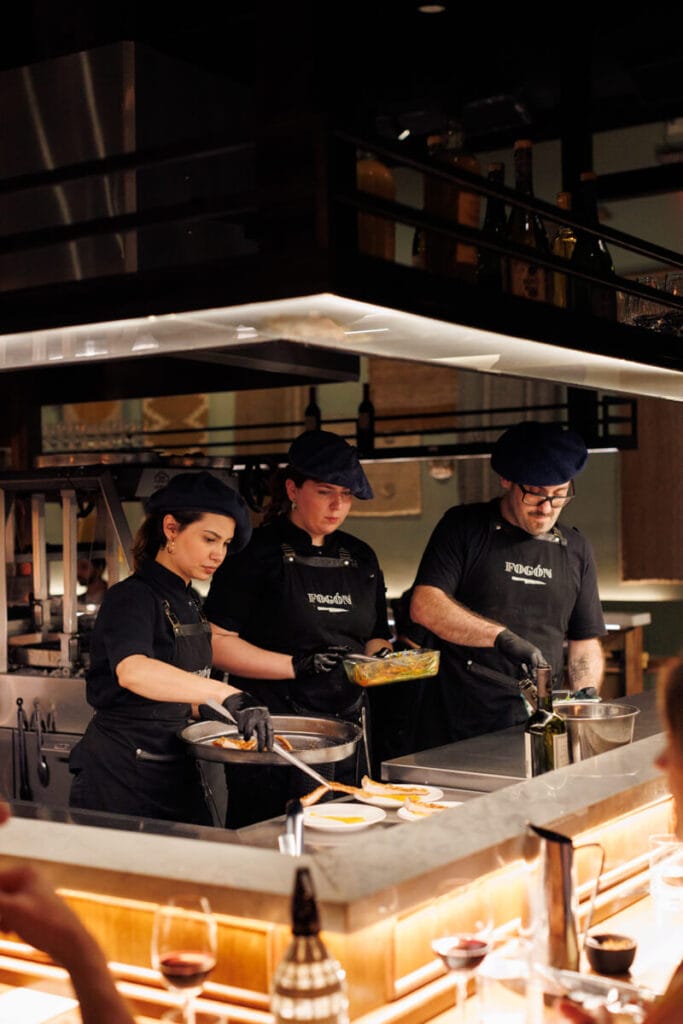
These two local staples offer classic dishes from steak to milanesa but with made with the best ingredients and, of course, wine lists (particularly Don Julio’s!).
Spend your first (and only) full day in Buenos Aires sightseeing. Take a bike tour of the city or a city walking tour.
For your last night in the city go to one of these top Buenos Aires tango shows, like the Secret Tango Society.
3 Days in Mendoza
On your third day of this Argentina itinerary, hop a flight to Mendoza, a.k.a. my happy place.
If you’re staying in the city, spend the afternoon exploring.
Go on a walking tour and visit the parks.
If you’re staying on a vineyard (my personal recommendation on where to stay in Mendoza, especially for wine lovers), get to know your bodega!
Attend your first wine tasting in Argentina’s wine paradise.

Spend your first full day in Mendoza tasting Malbec at the region’s famous vineyards. I highly recommend a private driver in the Uco Valley.
This region is closest the Andes and produces the highest quality wines and offers the most stunning vistas.
If you’re traveling solo and would prefer a tour group, I recommend this small group tour.
For your second day in Mendoza, if you want to tour more vineyards (which is practically ALL I do when I visit Mendoza), try visiting a different wine region than you did yesterday.
If you saw the Uco Valley yesterday, hire a driver or tour of Lujan de Cuyo today.
Related: The Best Wineries in Mendoza & How to Tour Them
If you’d prefer to do something non-wine related on your second day, head into the mountains to see one of the world’s tallest peaks, Aconcagua.
This guided tour is one of the most popular excursions in Mendoza.
If you’d rather relax, treat yourself in the Cachueta Hot Springs.
4 Days in Salta
On day 6 of this itinerary, tearfully bid adieu to the Uco Valley and fly to Salta in Argentina’s Northwest.
Wine lovers should keep Salta on their radar. This is where Argentina’s history of wine began centuries ago and it remains the country’s second largest wine region.
The variety to try here? The sweet on the nose but dry on the tongue white varietal, Torrontes.
Upon arrival in Salta, either pick up your rental car or meet your transfer and go directly to Cafayate, Salta’s main wine region.
Check into your hotel – I recommend Villa Vicuna – and wander the city.
You can try wine ice cream at Helados Miranda or even start visiting wineries with some of the bodegas that are located right downtown (Nani is a personal favorite!).
If you arrive early enough, schedule a sunset tour and tasting at Piatelli for an unforgettable experience.
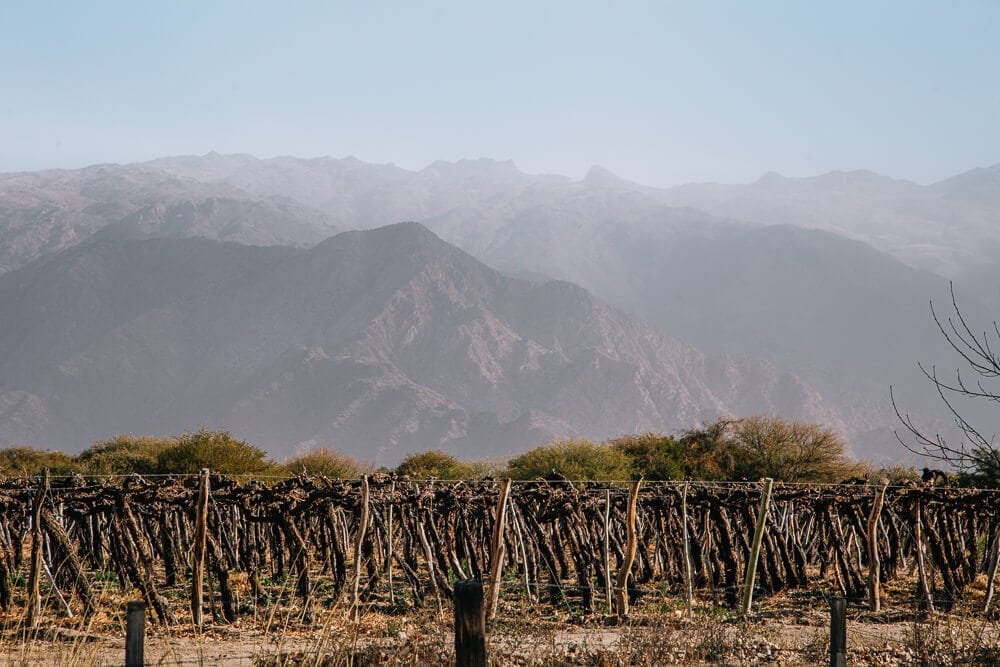
On your first full day here, tour the best wineries in Cafayate.
Unlike Mendoza, the wineries here are all fairly close to town. You can either take taxis or rent a bike (many hotels offer free bikes for guests).
With your second day in Cafayate, you can either visit more wineries (not a bad choice!) or a hike.
If you picked hike, the Cascadas del Rio Colorado hike is the best in town.
Take a taxi to the trailhead just outside of town and hire one of the guides you’ll see at the trailhead.
If you do this hike, visit nearby Finca Las Nubes afterwards. It’s my favorite winery in Cafayate and is very close to the trailhead.
They have an affordable menu and a panoramic view of town from their lawn (where you can lounge with wine and snacks).
Read More: The Best Things to do in Cafayate

Alternatively, you could also wake up with the sun and tour the Quebrada de las Conchas by car or bike.
I say get up with the sun because this allows you to beat any tour groups driving down from Salta city. You’d have the stunning formations all to yourself (something well worth the early alarm).
For your final morning in Cafayate, wake up and make your way back to the city of Salta.
If you didn’t see the Quebrada yesterday, do it today on your way to Salta. If you did it yesterday, skip it and go straight to the city.
Spend the afternoon exploring the city of Salta (read about what to see in my guide to Salta city).
Stay the night in Salta at Villa Vicuna and fly back to Buenos Aires the following day to either spend more time there or connect onwards to home.
WINE ITINERARY ALTERNATIVES/ADD-ONS | If you have more time, add it to Salta and use it to also explore Jujuy. The Northwest is spectacular, there is no such thing as too much time here. Any extra time you have, put it here. And to stay on brand with this itinerary, Jujuy is home to its own beautiful vineyards where to the vines share the soil with the cactus.
Wine Lovers Argentina Itinerary Logistics
Where to Stay: Hotels for This Itinerary
Buenos Aires Hotels
- Home Hotel, Palermo Hollywood
- BE Escondido by Coppola, Palermo Soho
Mendoza Hotels
- Casa de Huéspedes La Azul – If you want to stay on a vineyard, this is the guesthouse of my favorite family-owned bodega in the Uco Valley
- B&B Plaza Italia – Comfortable B&B in town if you prefer to stay in the city, we stayed here once and it’s great for couples
- Lares de Chacras – Split the difference of the Uco Valley and downtown by staying in charming Chacras de Coria in the Lujan de Cuyo wine region, just twenty minutes from downtown (easy to reach without a car, but still close to wine).
Cafayate Hotels
- Villa Vicuña – Midrange, in town one block from the main square
- Patios de Cafayate – Best option for staying at a winery
- La Morada Hostel – Budget
Salta Hotels
What time of year is best to do this itinerary?
This 10 days in Argentina itinerary is great year round.
Mendoza is beautiful all year. Summers are hot but dry. Winters are very cold at night but with sunny days. Harvest is in the fall with gorgeous, lush vines. You can’t go wrong.
Winters in Salta are gorgeous, expect cold nights but beautiful days. Summer can bring some rain and be very hot.
What to pack for this itinerary?
Buenos Aires is a casual city and you don’t need to pack particularly nice clothes just to go out here. Jeans and a nice top will be enough for a night out.
Comfortable, flexible shoes like a nice pair of sandals in summer or boots for winter will go a long way in Buenos Aires and Mendoza.
Mendoza and Cafayate are both very casual. You don’t need to dress overly nice to tour the wineries. Jeans and a nice top is enough, but of course, go all out if that’s your style! Bring a warm layer for at night, it gets chilly after the sun goes down.

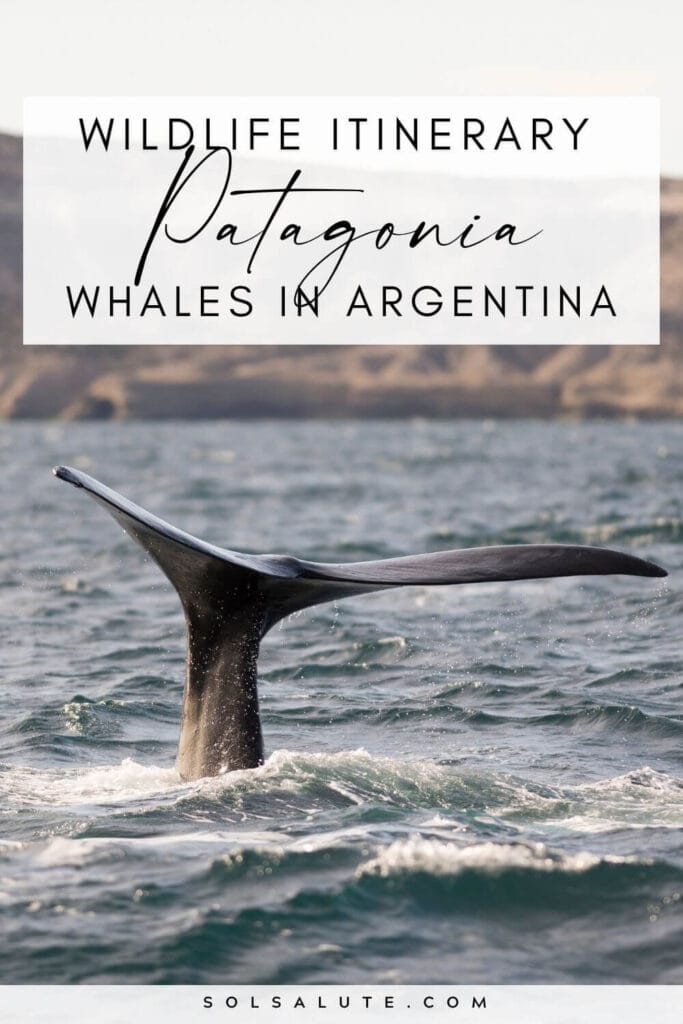
5. Coastal Patagonia: Whale Watching & Penguins
I’ll write the options for this itinerary a little differently than the previous Argentina itineraries in this article because it’s simply TOO hard to pick one single route for this rugged coastline.
If you’re sincerely interested in whale watching and exploring the Puerto Madryn area, please read this itinerary closely and examine all the options I mention.
Arrive and spend three days in Buenos Aires. For details on how to spend these three days, scroll up to the first itinerary in this article (The Highlights) or read my 3 Days in Buenos Aires Itinerary article.
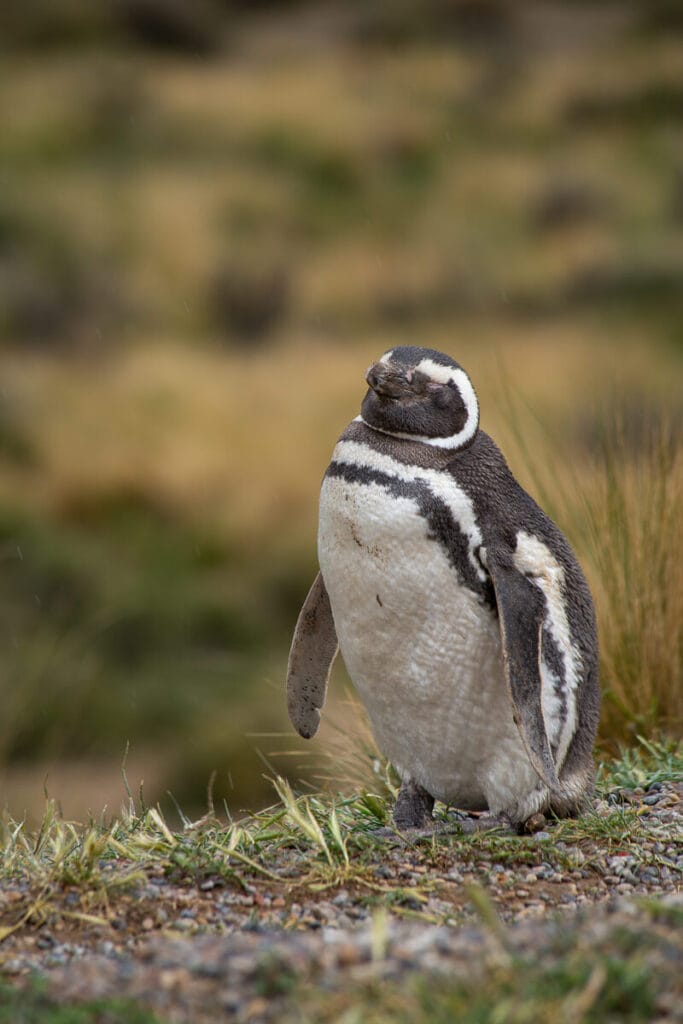
On day 4, fly to Puerto Madryn on Patagonia’s Atlantic Coast for whales, sea lions, and penguins! I recommend spending four nights here.
Budget Tip: Trelew is another city with an airport less than an hour’s drive from Puerto Madryn. If prices or flight schedules in Puerto Madryn don’t work for you, also look at flights and rental cars in Trelew.
Once here, you have a couple options on how and where to spend your time.
If you are willing/able to rent a car (check rates here), I recommend spending as many nights as possible in Puerto Piramides on the Peninsula Valdes instead of spending all of your nights in Puerto Madryn.
Located on the peninsula inside the nature reserve, you are in the heart of the action.

We stayed at Oceano Patagonia Wild Coast Residence one trip in Puerto Piramides and spent three full days exploring Valdes. On a second trip we rented an apartment here.
I promise, you won’t be bored here if you’re here for the wildlife.
We could even hear and watch the whales from our beds at the Oceano!
If you choose to go this route and stay on the peninsula, here’s my Peninsula Valdes guide.
If you do not want to or cannot rent a car, base yourself in Puerto Madryn and take excursions from there. Here’s a guide to the best things to do in Puerto Madryn where I link to the best tours to take.
Take one full day excursion into Peninsula Valdes including a whale watching boat tour.
Spend another day at Punta Tombo to see more penguins than you’ll know what to do with.
Read more: A Detailed Guide to Punta Tombo
Other possibilities include visiting a traditional estancia or snorkeling with sea lions.
For the final days of your itinerary, I’ll offer you two vastly different options to choose from.
Option one is for the intrepid traveler.
If you rent a car, drive four hours south along the coast. I know, four hours sounds like a lot.
Stay with me here, it’s worth it.
This is rugged, jaw-droppingly beautiful terrain and it does not get any more off the beaten path than this. The lodges here are remote and stunning.
If you have a budget to work with, stay at Bahia Bustamente.
If you’re leaning more towards a backpacker’s budget, stay at Cabo Raso.
Either way, you’ll have a wonderful time connecting with a remote corner of Argentina’s Patagonia most never see.
Option two brings us back to Buenos Aires.
If you’re reading this and saying to yourself, you HAVE to be kidding me if you want me to rent a car and drive four hours into the middle of God knows where Patagonia.
That’s fine. Get a flight back to Buenos Aires!
Once in Buenos Aires, get out of town. You’ll have already seen the city at the beginning of this itinerary.
Spend a couple nights in the country discovering rural Buenos Aires.
I recommend staying at an estancia to see Argentina’s gaucho culture. Estancia La Bandada is a luxury estancia in San Miguel del Monte.
It’s conveniently located for traveling to the airport (perfect for ending your trip). They have a beautiful property with top notch bird watching.
Alternatives to La Bandada are any estancia in San Antonio de Areco (the gaucho capital of Argentina!).
My favorite estancia here is El Ombu.
Read More: The Best Estancias near Buenos Aires
Wherever you choose to end this itinerary, Patagonia’s Wild Coast or an estancia near Buenos Aires, your trip will be memorable.
This is a unique itinerary for Argentina that many foreign tourists don’t choose, but it’s also one of my favorites!
Whales in Patagonia Itinerary Logistics
Where to Stay: Hotels for This Itinerary
Buenos Aires Hotels
- Home Hotel, Palermo Hollywood
- BE Escondido by Coppola, Palermo Soho
Puerto Madryn/Puerto Piramides Hotels
- Oceano Patagonia Wild Coast Residence – If you stay on the Peninsula Valdes in Puerto Piramides, this is the best hotel.
- La Tosca Hostel – Budget in Puerto Madryn
- Wyndham Madryn – Midrange
- Hotel Territorio – Best hotel in Puerto Madryn
What time of year is best to do this itinerary?
To see wildlife the absolute best months to do this itinerary is from late September through November. This is when the highest number of whales are here to breed.
That said, June through April are all good months to visit. In June, the whales begin to arrive and stay through early December. Penguins arrive in September and stay through April.
Click here for a complete wildlife calendar.
What to pack for this itinerary?
Buenos Aires is a casual city and you don’t need to pack particularly nice clothes just to go out here. Jeans and a nice top will be enough for a night out.
Patagonia, and the coast even more so, are extremely, extremely windy. Pack a nice wind/raincoat like this and a fleece, a beanie, a scarf, etc. You’ll be thankful for the layers. Summer months can be very warm (with the beaches welcoming sunbathers) but it can be unpredictable, so layers, layers layers.
Bring your best camera and don’t forget binoculars to see the wildlife. This pair is a great pair of binoculars but I also have a buyer’s guide to the best Safari Binoculars to help you choose.


6. Iguazu & The Wetlands in the Northeast
This 10 day trip to Argentina is particularly special, visiting the jungle and wetlands of the Northeast.
This region is seriously underappreciated by foreign visitors who tend to see only Iguazu.
- 3 Days in Buenos Aires
- 2 Days in Iguazu
- 4 Days in the Esteros del Ibera Wetlands
- 1-2 Days in Buenos Aires (option to extend with estancia or Tigre)
Arrive in Buenos Aires and stay for 3 nights.
For how to spend these days, refer back to the first itinerary in this article (The Highlights) or read my 3 days in Buenos Aires itinerary.
On your fourth morning catch a flight to Puerto Iguazu. Spend two days exploring the Argentina and Brazil sides of Iguazu Falls.
After 2-3 nights here, make your way to Corrientes to explore Argentina’s largest wetland systems, los Esteros del Ibera.
It’s easiest to travel from Puerto Iguazu to Posadas by car via Ruta 12, check rental rates here or by bus, check Busbud.
The drive is only 4 hours with worthy pit-stops along the way visiting the ruins of the Jesuit Missions and the Wanda Mines.
This region is very easy to drive, we spent a week on a road trip in Misiones and I recommend it if you’re up for it.

Once you reach Posadas, you have a couple of options.
If you want to stay closer to Posadas, allowing you to still drive yourself and spend less time on the road, book a room/package with Hotel Puerto Valle.
This hotel is just one hour past Posadas, along the same Ruta 12.
If you’d like to go deeper into the wetlands, I’d recommend returning the rental car and reserving a room at one of the many lodges in/around the village Colonia Carlos Pelligrini.
Read More: Complete Guide to Visiting the Esteros del Ibera


The drive from Posadas to Carlos Pellegrini is dirt and not passable if muddy unless you rent a 4×4 (which is very expensive).
Arrange transport with your lodge. Sidenote that for the rest of Misiones you don’t need a big car or 4×4.
How you’ll spend your days here depends on your lodge.
Packages tend to have set activities or they can arrange what you’re interested in, including but not limited to: horseback rides into the marsh, kayaking, nature walks, and boat rides.
After your time in Ibera is regretfully finishes, travel back to Buenos Aires to either spend some more time or to catch your flight home.
If you want to continue with nature and wildlife experiences, extend your time in Buenos Aires by staying on an estancia (like La Bandada with its gorgeous property and bird watching) or rent a cabin in the tropical Tigre River Delta.
Wetlands Itinerary Logistics
Where to Stay: Hotels for This Itinerary
Buenos Aires Hotels
- Home Hotel, Palermo Hollywood
- BE Escondido by Coppola, Palermo Soho
Iguazu Hotels
- The Gran Meliá Iguazú – This is a splurge but worth it if you can swing it. It’s located INSIDE the national park allowing you to see the falls without crowds and come and go from the park throughout the day.
- Iguazu Loi Suites – Jungle lodge near town
- Iguazu Falls Hostel
Esteros del Ibera Lodges
- Puerto Valle Hotel Boutique – Lodge closer to Posadas
- Ranchos de los Esteros – Great option right in Colonia Carlos Pellegrini
- Rincon del Socorro – Luxury, the best lodge in the Esteros del Ibera, hands down
What time of year is best to do this itinerary?
Spring, from September-November, is the best time to for this Argentina holiday with little rain and mild temperatures. Winter follows (June-August) with colder nights and very little rainfall.
Autumn (March through May) brings the most rain, making excursions more difficult and the road from Posadas rougher to navigate. Summer, from December through March is extremely hot and humid.
What to pack for this itinerary?
Buenos Aires is a casual city and you don’t need to pack particularly nice clothes just to go out here. Jeans and a nice top will be enough for a night out.
For Iguazu and the Wetlands, pack light comfortable clothing for the sun and humidity. Light blouses with a lot of skin coverage is ideal. For Iguazu, you’ll want clothes that dry quickly (avoid cotton).
Pack bug spray, a hat, and sunglasses. This isn’t a destination where you need to focus on fashion, put comfort first.
Bring your best camera and don’t forget binoculars to see the wildlife. This pair is a great pair of binoculars but I also have a buyer’s guide to the best Safari Binoculars to help you choose.
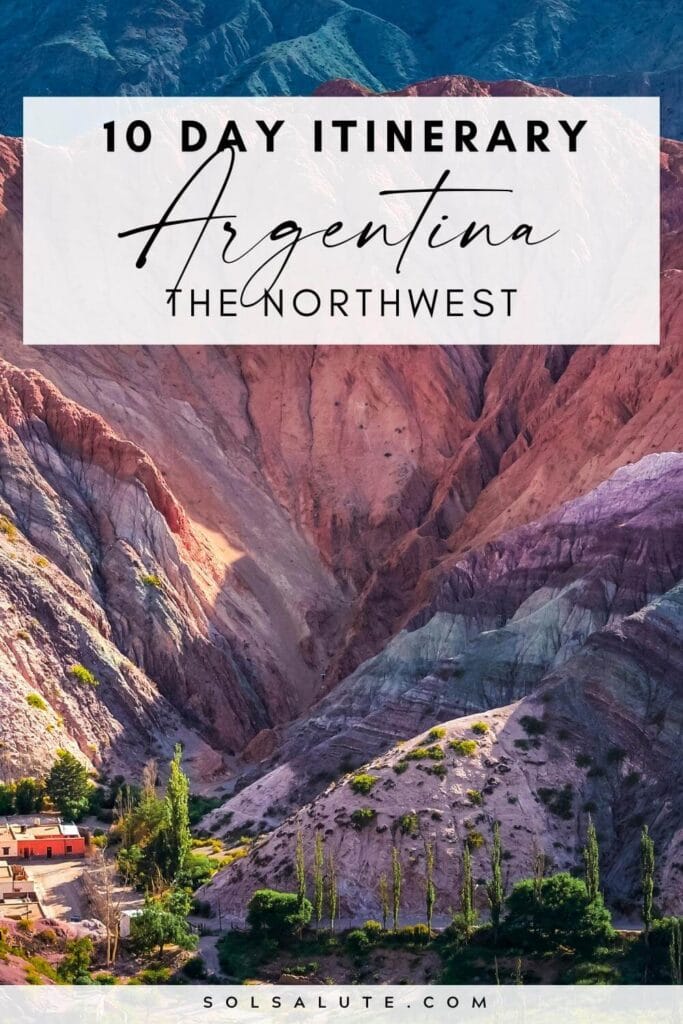

7. Culture: 10 Days in Argentina’s Northwest
Salta and Jujuy are two of the most stunning provinces in Argentina’s Northwestern desert.
They offer a rich indigenous culture, rainbow mountains, the country’s best cuisine, and charming villages.
You could easily spend 10 days in Jujuy, and another 10 in Salta.
But I’ve also done a road trip where I toured both in 9 days.
I have very detailed articles and guides for this region to help you plan.
Below I’ll offer three itinerary choices and link to posts that will help you flesh them out.
9 Days in Salta & Jujuy
For this route, read my detailed itinerary for 9 days in Salta and Jujuy.
We did this trip in 2018 and I’ll be completely honest, it was a lot.
We had very early mornings and got back to our hotel very late every day.
Our days were jam-packed. But we saw A LOT and it was gorgeous!
If you can add more days to this itinerary, do it. If not, plan for busy but memorable days.

9 Days in Jujuy
This is a trip I haven’t done but would LOVE to as soon as humanly possible.
We only spent 3 days in Jujuy but I could have spent 3 days each in each of the villages we visited.
I love using the town of Tilcara as my base because there is a lot of life here. Tilcara has great restaurants, hotels, and is centrally located in the quebrada.
Stay here 3-4 nights and from here visit: Purmamarca and the Salinas Grandes Salt Flats (can be done together in one day), wineries in Maimara, Tilcara itself, and hike the Quebrada de las Señoritas in Uquia.
After exploring these villages, head even further north (technically back into Salta), to Iruya. This village clings to the cliff’s edge and is said to be spectacular.
End the trip with a few days in the yungas, the lush green jungle. There are hikes and wildlife to discover here that don’t make onto most people’s itinerary.
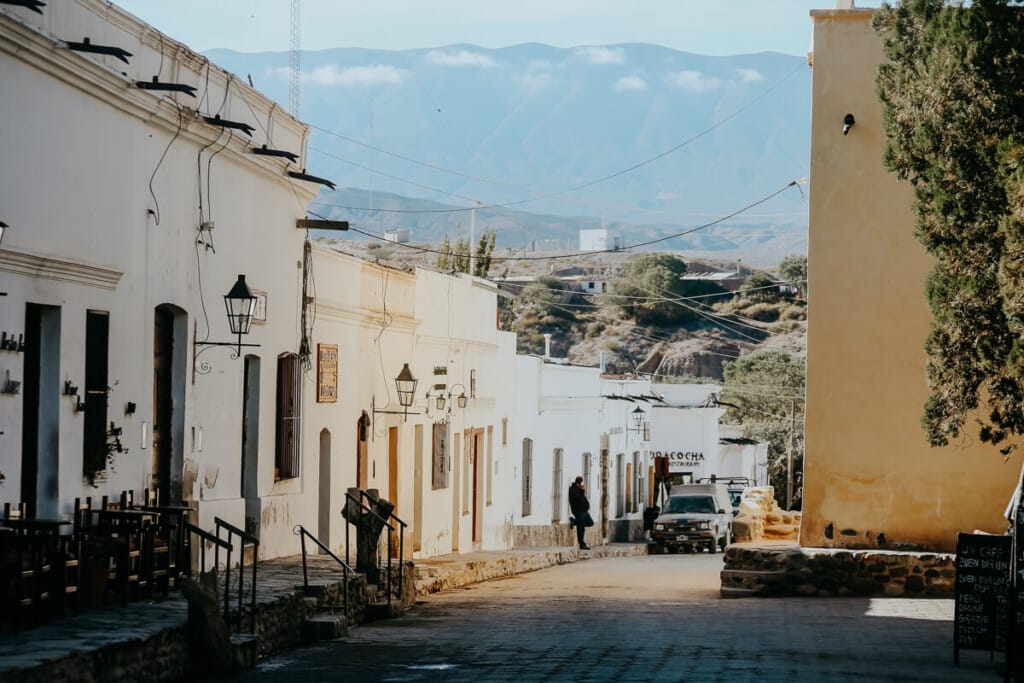
9 Days in Salta
For 9 days of exploring Salta, I have a very detailed itinerary for you to follow because we just did this road trip recently.
Here is my perfect Salta road trip.
- Start by arriving in Salta, getting your rental car, and immediately driving Ruta 33 to Cachi where you’ll spend 3-4 nights (we stayed for 4). [Read: Things to do in Cachi]
- From here, drive Ruta 40 to Cafayate where you’ll spend another 3-4 nights (again, we stayed for 4). [Read: Things to do in Cafayate]
- From here, drive Ruta 68 back to Salta city, where we stayed for one night. If you spent only 3 nights in Cachi and Cafayate, you can spend more time here in the city. [Read: Things to do in Salta City]
This road trip has some of the country’s most scenic drives, beautiful villages, and best wineries.
Salta & Jujuy, Northwest Argentina Itinerary Logistics
This region is seen best with your own car. Check rental rates here.
Where to Stay: Hotels for This Itinerary
There are a LOT of villages listed in these itineraries in both Jujuy and Salta. For simplicity’s sake, click the individual itinerary links included above to see where we stayed.
What time of year is best to do this itinerary?
The Northwest is beautiful year round, but winter and the shoulder seasons of spring and fall are the best times to visit.
Days will be sunny and warm with temperatures dropping at night. Remember, this is the desert and there is a wide range of temperatures from day to night.
Summer (mainly January and February) is the rainy season and storms can make some of the roads on these itineraries impassable without a 4×4.
Don’t let that discourage you as many of the highways are paved. For the dirt roads, you can either take a different route (investigate in advance or ask your hotels) or hire a transfer. This is advisable for the road up to Iruya, for example.
This region of Argentina is very devout, so if planning to visit over Carnival or Easter holidays book as far in advance as possible. It gets VERY crowded.
What to pack for this itinerary
Wear layers for when temperatures dip at night. You’ll want plenty of sunscreen and sunglasses for the days out.
If you like hiking, make sure to pack at least one outfit for that as there are some beautiful trails here.
Dress comfortably in jeans, sweaters, and sensible shoes. This area is very casual and you don’t need to go over the top, even for the wineries.
10 Days in Argentina: 7 Ways
If you’re still reading I thank you for your time.
This post has been a LONG one, filled with TONS of helpful information for you plan to the best 10 days in Argentina trip possible for you.
Whether you want to sleep in a jungle treehouse or hike in Patagonia, I hope you found what you’re looking for.
If you have any questions, and I suspect you might, comment below.
I always respond as soon as I can.
Health Insurance Requirement
Foreign travelers are currently required to have travel medical insurance. While agents are still figuring out enforcement, they could deny you entry if you do not meet the requirement. Also, requirements aside, medical insurance is always a good idea when you travel.
SafetyWing’s Essential Plan meets all of the requirements Argentina is asking for (think hospital stays or antibiotics). It also covers lost luggage, travel delays and evacuations. Click here for more information to avoid future headaches.
Argentina Travel Resources
- BOOK A CONSULTATION | I offer one-on-one travel consultations to help you plan your trip to Argentina. Pick my brain to get a local’s insight. Click here for more information.
- ☕BUY ME A COFFEE | If you’ve enjoyed my blog and found it useful, you can buy me “virtual” coffee.
- MY MAP | Buy my interactive map with 300+ pins to have access to the city as I see it. It is an invaluable resource. See more here about how it works.
- AIRPORT TRANSFERS | Having a driver waiting for you is ideal for a stress free arrival, Cesar and his team here is the best option for a driver from Ezeiza or Aeroparque, they are my go-to airport ride!
- TRAVEL INSURANCE | Always travel insured. Anything can happen anywhere and it is scarier and costlier in an unfamiliar country. SafetyWing’s Essential Plan covers unexpected travel and medical emergencies and even offers add-ons like electronics theft or adventure sports. It is the best if you’re coming on vacation. If you’re coming as a digital nomad or an extended stay, you need their Complete Nomad Plan which also covers routine check ups, maternity, mental healthcare and more. Read more: Health Insurance in Argentina
- PHONE PLAN | These days, traveling with data is essential. Especially in Argentina where everything is managed on Instagram and WhatsApp. I recommend this E-SIM card. It’s hassle-free and affordable, for more read how to get an Argentina sim card.
- ACCOMMODATION IN ARGENTINA | booking.com is the most common hotel site used in Argentina and it’s where you’ll find the most options.
- RENTAL CARS | I love using Discover Cars, it is a great platform to compare different rates and providers and I find they have responsive customer service.
- BUS TICKETS | Check Busbud for long distance bus routes and tickets.
- VPN | If you’ll be using a public WiFi connection and want to secure your data, I highly recommend using a VPN, I personally use and have had a good experience with ExpressVPN. I also use it to access Hulu and American Netflix from Argentina.
- FLIGHTS | Always check Google Flights and Skyscanner for flights to and within Argentina. Aerolineas Argentina is the local airline with the most routes. FlyBondi and Jetsmart are two budget airlines with dirt-cheap prices (but expect to pay for every add-on like luggage).


Love your articles. I’m using it to plan my trip to Argentina! I have a quick question. I have 3 days for Mendoza. Is it worth spending a day in town and 2 days on a Wine Estate? or just a day on an estate and stay at a regular hotel and do activities like horseback riding and wine tasting? Thanks in advance.
It really depends on your interests! I’d prefer to skip the city and do just wine tasting, horseback riding, and enjoy nature! Others really do love a day in the city
Thank you so much for all of the information! My husband and I have 3 full days (4 nights) for the the northwest. Renting a car at the airport when we arrive late in Salta and plan to stay there that night. Trying to decide whether to road trip to Cafayate/Cachi or Jujuy. Would probably stay 2 nights on the road, then the last night in Salta again. I drink wine he does not, so probably wouldn’t do much time at wineries. Which would you choose if you had to.
I love your article.
Do you have a suggestion for an itinerary for 10 days or 2 weeks like the first one: Buenos Aires, Iguazu, but instead of Mendoza, some part of Patagonia Ushuaia? Would that make sense or hassle?
I have been to Patagonia in Chile but my partner hasn’t. I am Brazilian and my partner is Australian.
We are coming from Australia and I thought we had lots of wine-tasting types here.
Please let me know your thoughts
. Thank you, and congrats on amazing work
You could definitely do it, see Buenos Aires in a day or two on the start and end of your trip, spend two days in Iguazu and the rest in Patagonia!
In the case that one doesn’t place much importance on wine, I’d go for Cachi!
Thank you so much for all this info, soooo helpful!
I am wondering, is it possible to do 3 days in Buenos Aires, 3 days in mendoza, and 4 days in Patagonia? We’re more wine people than waterfall people, and want to do Patagonia but are worried about squeezing it all in. thanks!
Patagonia is a massive region so you’d have to pick one area, like Bariloche. It’s possible if you find the right flights but you might have a more enjoyable time with splitting the time between just two areas so you don’t spend so much of your time flying.
Hi Erin, thankyou so much for this incredibly valuable post! My partner and I are planning 2+ months in Argentina and Chile, so we will basically be combining all your itineraries together. We’re prepared to fork out to have a rental car for basically the whole time. We love to be independent and want the flexibility of a car. Do you think a 4×4 is necessary to have anywhere? (We have been looking at renting a 4×4 camper from Wicked in Chile but it’s quite pricey). And would you recommend we just bite the bullet and rent a car for the entire period, or do a number of smaller road trip loops in different regions, and travel by bus or plane between them? Thankyou so much! Sally
Hi Sally! It depends on where you’re going, renting a car and returning it across the country in a different region can be nearly impossible. In that sense it might be better to rent multiple cars and fly between destinations. For Patagonia, for example, you could rent one car and do a long road trip, crossing into and out of Chile (you can get permission to cross the border but will need to return to Argentina to return the car). If you need any more help planning your trip, you can book a call with me as I am limited in the time I can dedicate to comments and emails:
https://solsalute.com/book-a-call/
Do you get a lot of mosquitoes in BA? I’m think of visiting next November and then travelling to Patagonia. Thanks
Buenos Aires has a lot of mosquitos, yes. Last summer they were a plague and there was a bad Dengue outbreak. This year is so far less intense than last year and at normal levels (even after storms) but normal levels does mean mosquitos so bring repellent/wear repellent.
Was wondering if like the travel restrictions state, that Rosario and Cordoba should be avoided due to safety? Or is that nonsence?
Both are fine for tourists! Rosario does have issues due to drug cartels but the areas downtown where you’d go aren’t affected. I felt the same in Rosario as I did in Buenos Aires, safe.
https://solsalute.com/blog/things-to-do-in-rosario-argentina/