
Despite living in Argentina for nearly 16 years, I’m still not used to how logistically challenging it can be to get around Argentina.
All of my trips begin and end in Buenos Aires, where I live. This is very easy since this is the hub for all flights.
Consulting with travelers as I help them plan their trips across the country, hitting up one region after another, I’ve realized how savvy you need to be to connect destinations.
Flights often involve returning to Buenos Aires and enduring a long layover. Patagonia is the most popular destination in Argentina but it isn’t as interconnected as you’d (rightfully) expect it to be.
Buses are often the best alternative to flights but can be intimidating if you don’t know what to expect or how to book.
And everyone asks about trains, what about train travel? Where are the trains!?
This article is filled with local tips and insight into getting around Argentina, from planes, trains, to automobiles.

QUICK NOTE: This post contains affiliate links and Sol Salute may receive a commission for purchases made through these links, at no extra cost to you.
Flights in Argentina
Argentina is a massive country and if you want to visit Iguazu, Buenos Aires, and Patagonia… that’s a lot of ground to cover.
You’ll want to fly.
If you have a large distance to cover, I recommend first checking to see if flights are available and within your budget.
Be careful about airlines, as some are more reliable than others. For that read my guide to airlines in Argentina.
But TLDR is to look in this order → Aerolineas Argentinas (most expensive, most reliable), Jetsmart (cheaper, still reliable), then Flybondi (least reliable, cheapest).
Depending on when the article you are reading was written, you might find conflicting our out of date information.
The Argentine economy is notoriously volatile and things like prices of airfare have changed drastically over the years.
When I first moved here in 2010, flights were exorbitant and out of reach for me as a backpacker. Nowadays (late 2025), budget airlines have entered the chat and driven costs down to a more reasonable price point.
Tips for Booking Flights in Argentina
- The largest airline for domestic travel is Aerolineas Argentinas.
- Budget airlines are FlyBondi and Jetsmart. You can sometimes get bargain basement prices with them but will have to pay for all add-ons (like choosing your seat, carry on bags, food, anything). I find Jetsmart to be more reliable than FlyBondi.
- BOOK DIRECT | I recommend booking direct with the airline whenever possible. Airlines here are notorious for changing times and even the airport. If they change your flight and the change doesn’t work for you, they will change it back to a better time for free. This is easy to fix if you book direct (call or message them on the airline social platforms). If you book with a third party they will always try to shift responsibility from one to the other, it can be a major headache.
- BE FLEXIBLE WITH DATES | If you want to book a direct flight to cities besides Buenos Aires (ej: Mendoza to Salta or Iguazu to Mendoza), be flexible on dates as direct flights may not operate 7 days a week. Check Google Flights or Skyscanner to check routes. Plan your itinerary accordingly.
- BUENOS AIRES AIRPORTS | Ezeiza is the international airport about 40 minutes to an hour’s drive from the center (without traffic). Aeroparque is the domestic airport, located in Palermo. Take into account which is most convenient.

Rental Cars & Road Trips in Argentina
My favorite way to see Argentina is by car – check rental car rates here.
There are countless scenic drives and off the beaten path destinations that you can’t reach any other way, like our Salta road trip or the wildlife paradise, the Peninsula Valdes.
Day tours are possible but never do these destinations the justice they deserve.
We’ve also road tripped in Mendoza (to San Rafael), Ushuaia, El Chalten, and even in Iguazu’s jungle province, Misiones.
Road quality in Argentina is typically very good and it is safe to drive here.
Of course, the farther off the beaten path you go in Patagonia you go the more literal that phrase becomes. Paved roads give way to gravel (known as ripio here).
Read More: Driving in Argentina: Everything You Need to Know
You don’t usually need a 4×4 for the most popular destinations but if you want to get adventurous, you probably need to upgrade.
And while I love an Argentina road trip, it’s not cheap to rent cars here. Here are some tips to help.
Tips for Renting Cars in Argentina
- MANUAL TRANSMISSION | Many agencies don’t have automatic cars or if they do, it has a high price tag. If you travel often, it’s in your interest to learn to drive a stick shift.
- GO LOCAL | Small, local agencies tend to be cheaper than international companies. Of course start your research on aggregate sites like this, since it’s a reliable company you can trust. But if you’re willing to do a little extra work (usually by Whatsapping agencies), renting from a small, locally owned company can usually save you some pesos.
- Get unlimited mileage, distances are large here.
- Don’t wait until the last minute, especially in busy seasons (January/February and winter holidays in July). Cars can run out in places like Bariloche and prices will only go up.
- Some areas are most expensive. Patagonia is expensive and that includes rental cars. The Northwest is more affordable, as is Misiones in the Northeast.
- Crossing the border with your car isn’t always allowed and if it is, can come with an additional fee. Check with your agency in advance if planning to cross into Chile.
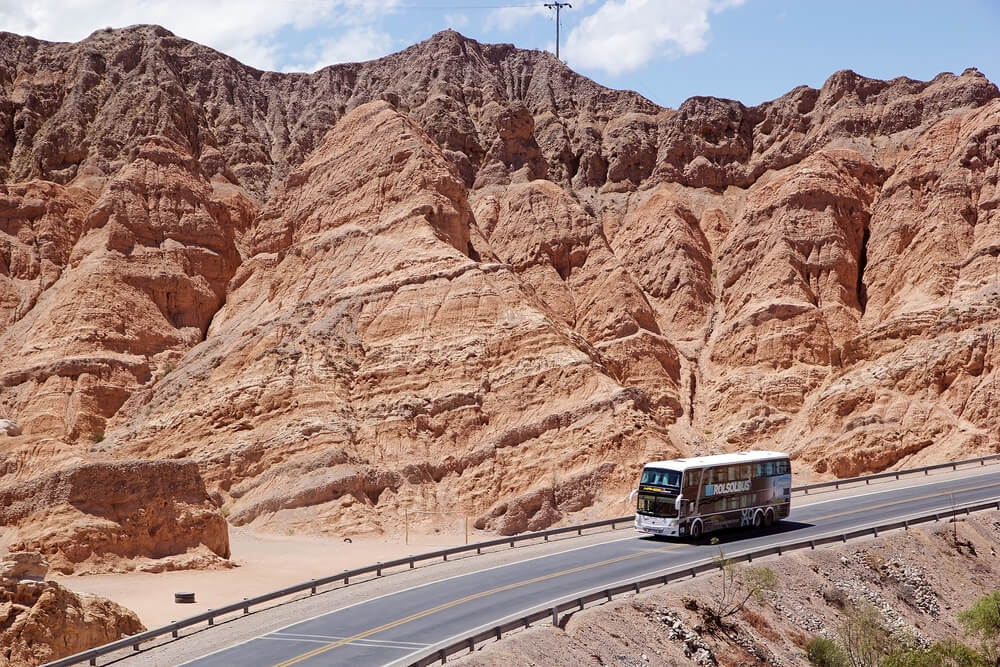
Buses in Argentina: The Long Distance Unsung Hero
Nothing sounds appealing about an overnight bus, but I promise that it isn’t as painful as it sounds here in Argentina.
With flights historically being very expensive here, buses were traditionally the most common way to get around here.
I took an 18 hour bus to Iguazu and a 20 hour ride to Bariloche back in 2010.
Now that flights are more reasonable, I wouldn’t make buses your first choice. But don’t write them off completely, either.
Some destinations can be easier to get to by bus, The Esteros del Ibera Wetlands, for example.
And sometimes falling asleep on an overnight bus is easier than dealing with airports. For destinations like Cordoba, an 8-10 hour bus ride means you’ll sleep in their comfortable lie flat seat and wake up in your destination.
You saved the hassle of an airport and the money of a hotel for that night.
Buses can also save the day in areas where there might not be flights connecting cities, like Bariloche and El Calafate.
Tips for Argentina Bus Travel:
- PRO TIP: Book the 180′ lay flat seats (cama) or 160′ semi-cama for maximum comfort. But don’t underestimate how much more comfort 180 degrees offers over 160.
- Don’t trust that the wi-fi they promise will work, it never does.
- And do not bother with the food they serve, pack snacks and entertainment.
- Bring noise cancelling headphones.
- Check Busbud for schedules and prices to book in advance. If your itinerary shows NO availability, you might be looking too soon.
- If you’re already in Argentina and can be flexible, go in person to the bus terminal to buy your ticket for the cheapest price.

Trains: Getting Around Argentina by Rail
Train travel isn’t nearly as common in Argentina as it is in Europe.
There are a few long distance routes available – to the Northwest in Tucuman, for example – but it’s not ideal and I don’t recommend it.
As a fun alternative, tourist trains have popped up on old rail lines in certain areas and offer stunning vistas.
The Tren a los Nubes in Salta, the Tren del Fin del Mundo in Ushuaia, and the Tren de la Costa in Buenos Aires are all excellent day trips.
The train system in the city of Buenos Aires (and surrounding suburbs), however, is excellent. If you enjoy traveling by public transportation when you travel, the train system here is a great way to get around the city.
You can use it to reach Tigre, one of the most popular day trips from Buenos Aires.
For more, read my complete guide to train travel in Argentina.
How to Get Around Buenos Aires
Public transportation is very, very good in Buenos Aires. But it can be intimidating if you’re not used to it.
Buses, called colectivos, are the most prevalent and can get you anywhere you need to go but can be hard to navigate if you’re not used to the city or don’t speak Spanish.
Instead I recommend sticking with the subway, called the Subte (for subterreano).
The D line connects everything you need from Plaza de Mayo/San Telmo to the Teatro Colon to Palermo.
For more, read my complete guide to conquering Buenos Aires public transportation.
SUBE cards are the transport card used in Buenos Aires and across Argentina (certain cities like Bariloche use it, as well). It used to be a requirement but Buenos Aires is finally getting with the times.
You can use your credit cards or digital wallets to pay for the subte, trains and buses.
Google Maps is mostly reliable for getting around by public transportation. But I do find it doesn’t always offer the best bus options for your route. Take it with a grain of salt. It’s great for walking/driving routes and trains/subtes.
For other harder to reach areas, like Caminito in La Boca or Belgrano, you can always take a taxi, Uber, or for more fun, the Hop On Hop Off bus.
Health Insurance Requirement
Foreign travelers are currently required to have travel medical insurance. While agents are still figuring out enforcement, they could deny you entry if you do not meet the requirement. Also, requirements aside, medical insurance is always a good idea when you travel.
SafetyWing’s Essential Plan meets all of the requirements Argentina is asking for (think hospital stays or antibiotics). It also covers lost luggage, travel delays and evacuations. Click here for more information to avoid future headaches.
Argentina Travel Resources
- BOOK A CONSULTATION | I offer one-on-one travel consultations to help you plan your trip to Argentina. Pick my brain to get a local’s insight. Click here for more information.
- ☕BUY ME A COFFEE | If you’ve enjoyed my blog and found it useful, you can buy me “virtual” coffee.
- MY MAP | Buy my interactive map with 300+ pins to have access to the city as I see it. It is an invaluable resource. See more here about how it works.
- AIRPORT TRANSFERS | Having a driver waiting for you is ideal for a stress free arrival, Cesar and his team here is the best option for a driver from Ezeiza or Aeroparque, they are my go-to airport ride!
- TRAVEL INSURANCE | Always travel insured. Anything can happen anywhere and it is scarier and costlier in an unfamiliar country. SafetyWing’s Essential Plan covers unexpected travel and medical emergencies and even offers add-ons like electronics theft or adventure sports. It is the best if you’re coming on vacation. If you’re coming as a digital nomad or an extended stay, you need their Complete Nomad Plan which also covers routine check ups, maternity, mental healthcare and more. Read more: Health Insurance in Argentina
- PHONE PLAN | These days, traveling with data is essential. Especially in Argentina where everything is managed on Instagram and WhatsApp. I recommend this E-SIM card. It’s hassle-free and affordable, for more read how to get an Argentina sim card.
- ACCOMMODATION IN ARGENTINA | booking.com is the most common hotel site used in Argentina and it’s where you’ll find the most options.
- RENTAL CARS | I love using Discover Cars, it is a great platform to compare different rates and providers and I find they have responsive customer service.
- BUS TICKETS | Check Busbud for long distance bus routes and tickets.
- VPN | If you’ll be using a public WiFi connection and want to secure your data, I highly recommend using a VPN, I personally use and have had a good experience with ExpressVPN. I also use it to access Hulu and American Netflix from Argentina.
- FLIGHTS | Always check Google Flights and Skyscanner for flights to and within Argentina. Aerolineas Argentina is the local airline with the most routes. FlyBondi and Jetsmart are two budget airlines with dirt-cheap prices (but expect to pay for every add-on like luggage).

Hi! Thank you so much for sharing. Planning Argentina seems overwhelmingly difficult when not knowing what to expect! We are trying to plan our 3 months itinerary for end September to end December, and we are expecting to stay 1 month in Argentina.
Do you know whether the Argentinean busses are more expensive online? Many of the busses we can’t seem to find online, and if we do, they seem expensive. Example: Bus from Calafate to Bariloche is 23.000 ARS at the moment. Does this sound as a good price? Sometimes it seems that flight might be cheaper, but maybe I’m wrong?
Thank you very much!
Best regards,
Laura
Hi Laura,
Buses can cost as much as a flight, you’re not wrong. When I first moved here in 2010 flights were VERY expensive and those buses made more sense financially. These days, flights make more sense. The main benefit with buses is when they connect cities where flights don’t connect directly (like Bariloche and El Calafate, where you annoyingly have to return to BA for a long layover). Most people just prefer to bus it to avoid the back and forth.
If the dollar blue is still around as strong as it is today, you could save money by paying cash in person once you are here. Otherwise the costs are the same in person as they are online.
Hi there,
Thanks for all the information. Just an update from March 2025…
The price of bus tickets may differ in person and online. I was going from Iguazu to Cordoba. It cost 100,000 online and 80,000 in bus station. It’s the difference between paying by cash and by card.