
Argentina covers a lot of territory.
You can’t just fly into a city for two or three days and call it a day.
The beauty here is in the landscapes, the small villages, and outside of the city limits.
From the 7 Lakes Route in Patagonia to the beautiful scenic drives in Salta, my favorite way to explore this country is on road trips.
But is it safe and easy to drive in Argentina?
This post is a guide to help remove any doubts you may have in driving and renting cars in Argentina.
Get behind the wheel so you can see the hidden corners of this beautiful country.

QUICK NOTE: This post contains affiliate links and Sol Salute may receive a commission for purchases made through these links, at no extra cost to you.
Renting a Car in Argentina: What You Need to Know
I’ve rented cars all over the country and I’m not loyal to any agency. I am loyal to my pocketbook.
If you want a name you recognize, international car rental agencies like Hertz and Sixt are present across Argentina. But you’ll also see more small, locally run agencies.
These are safe to reserve with, even if their websites look like they were created in 1999.
But since these smaller agencies don’t always have straightforward booking platforms and Whatsapping 5 different companies to compare your options can be a hassle, I recommend renting with Discover Cars.
This way you can compare different agencies all in one location and have your terms clear from the start (particularly policies like cancellation and insurance).
Compare rates & availability now.
We have rented on Discover Cars for trips like our Lake District Road Trip in Patagonia and always had a good experience. I also find them to have better customer service than their competitors.
Money Saving Tips for Argentina Car Rentals
Renting a car in Argentina typically costs around $550 US a week.
Here are some tips to save money and get around without trouble.
Don’t forget to review the laws mentioned later in this article.
- Reserve as far in advance as you can, especially if traveling in the summer months from mid-December to early March. Agencies can (and in summer, WILL) run out of cars and even waiting two weeks to book (in low season for my Salta road trip) made me miss a cheaper deal and I had to spend an extra $150.
- Know how to drive a stick shift. Most rental cars in Argentina are manual transmission, learning to drive a stick if you don’t already know how is a good way to save money on car rentals worldwide. If you need automatic, check with the agency that they have it and be prepared to spend up to twice as much as for a manual.
- If you want to cross the border in your rental car, check what’s allowed beforehand. Usually it’s allowed as long as you return it in Argentina, so plan on a round trip visit and to pay a surcharge.
- Gas is relatively affordable, averaging U$3.50-4 a gallon or just under a dollar a liter.
- Gas stations are not self service
- Plan round trip road trips: Returning your car in a different destination will come with a fee. It cost us $100 USD to pick up a car in San Salvador de Jujuy and return is one hour away in Salta. They quoted us $200 USD to pick up a car in San Martin de los Andes and return it 2.5 hours south in Bariloche.
- Fly between destinations rather than plan one cross country road trip. Save time and money by flying to Salta and Patagonia and Mendoza, rent cars in each destination if needed.
- Other fees – like additional drivers or car seats – are a lot more affordable than what I am used to in the US. Of course, this varies by destination and agency. But usually one additional driver has always been included at no extra fee (with the sole exception of Europcar in Bariloche). Car seats are usually $5-10 USD per day.

Do you need a 4×4 to drive in Argentina?
It’s very rare that you’ll need a 4×4 to drive in Argentina if you’re visiting the most popular destinations.
But if you want to get off the paved roads and cross crazy mountain passes in Jujuy like the Abra del Acay, a 4×4 is a good idea.
That said, do check with locals before departing into the unknown if you’re going anywhere “off the beaten path.”
While most highways are paved and even most dirt roads are in decent condition, when it gets bad, it gets bad quick. I am saying this as someone who had to have a gaucho tow her out of the mud a few times.
Mountain passes in the Northwest, when dry, are fine in a tiny compact car.
But in rainy season (January and February) a storm can make them completely impassable. Ask the locals, ask your hotel. Just make sure before you run off.
Wait, does that mean if it rains or is muddy, I can’t rent a car?
No, there is usually a different route you can take that is paved. So, ask to be sure.
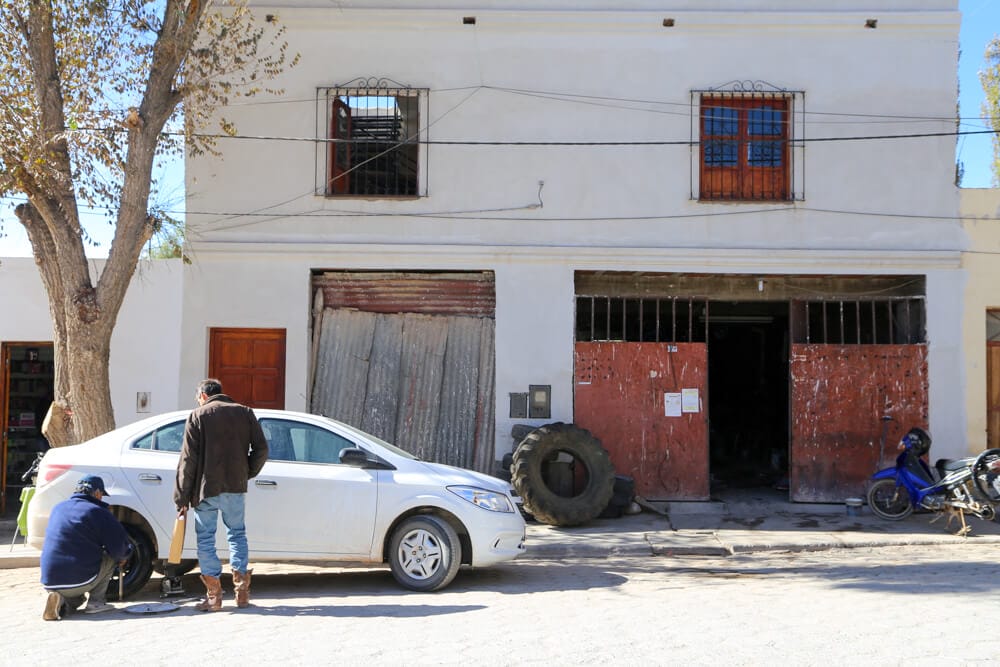
Flat Tires, Tow Trucks and Car Repairs
We have done our share of damage to Argentina’s rental cars.
In Salta, we flattened a tire.
Thank goodness it went flat as we pulled into the town of Cachi and NOT when we were at 5,000 meters above sea level on top of the Abra del Acay mountain pass earlier that day.
In Salta yet again, we hit a rock that quickly emptied our car of all the oil and killed the engine.
My husband had to wait three hours for a tow truck from Cafayate.
Why so long?
That same tow truck was busy bringing another dead car into town from three hours up the road.
Here’s my advice on what to do if you need assistance:
- While calling your rental agency is always a good idea, sometimes depending on the damage, it’s easier/cheaper to take care of business yourself. We repaired our flat tire in Cachi for next to nothing, they were never the wiser. For the tow truck, we called a tow ourselves and saved ourselves hours of waiting.
- Gomeria is the word for a local tire shop, you’ll find one in even the tiniest of towns. If all you need is a quick patch, just bring your rental car to a gomeria for a parche (patch).
- Remolque is the word for tow truck. If you have cell service and you speak Spanish, finding your own tow might be faster/cheaper than having your rental agency mediate.
- DON’T SPEED. It can be tempting to go over the speed limit if the dirt road is in good condition, but you never know when a big rock or livestock will appear out of nowhere (like our oil/engine killing rock in Salta).
Is is safe to drive in Argentina?
Overall, yes.
It is very safe to drive in Argentina.
But leave the aggressive driving for the locals, who drive like bats out of hell.
Argentine drivers are very aggressive drivers.
Even after more than 15 years of living in Buenos Aires, driving in the city stresses me out.
But it really doesn’t matter if you’re in the city or in the middle of an isolated jungle, it’s inevitable an impatient sedan will be riding your tail.
On crowded highways and avenues in Buenos Aires motorcycles dart and weave between lanes of traffic.
It’s as if they’re daring you to run them down and if I said I wasn’t tempted to do so, I’d be lying…
With all that said, driving in Argentina is safe.
Drive the speed limit and respect the laws and you won’t have any problems.
Driving is most stressful in Buenos Aires city and its surroundings.
Once you find yourself in the expansive terrain of Patagonia, for example, things relax.
Don’t let drivers pressure you to speed and drive unsafely just because they’re irrationally and impatiently eating your tailpipe.
And always check your blind spots for rogue motos.
Once, in the jungles of Jujuy on a road that was too narrow to fit my compact car completely into one lane and filled with hair pin turns that had loose livestock awaiting around blind corners, car after car after car rode my tail, begging me to speed.
Had I given into their pressure I would have had a head on collision with a massive pig (not a metaphor).
Read Next: Planes, Trains, & Automobiles: How to Get Around Argentina

Do you need an International License to drive in Argentina?
Foreigners can drive in Argentina on their driver’s license from home, considering both the license and their tourist visa are valid.
You do NOT need an international driver’s permit to rent a car in Argentina, if you meet these easy requirements:
- Holders of a driving license that uses the English alphabet
- Licenses issued from an EU State, European Economic Area, Australia, England, South Africa, Switzerland, and the United States
- Countries under the Vienna Convention on Road Traffic
This will cover most tourists reading this article.
If you’re an Expat/Immigrant and a legal resident of Argentina, you will need to apply for a local license after your first year of residency.
It’s fairly painless if you speak the language, here is my guide to getting a driver’s license in Argentina.

Argentina Driving Laws: What You Need to Know
Without giving you the complete 6 hour driver’s ed course I had to take here, I’ll include the vital things you need to know about driving in Argentina.
- In Argentina, drive on the right side of the road.
- It is required to keep your low lights on at all times on most highways and main roads, when in doubt, just leave them on
- Seatbelts are required
- And hey, fellow Americans! Right turns on red lights are NOT allowed.
- Speaking of turns, on major roads/avenues left turns are not allowed unless a sign specifically states that it is allowed. You may have to turn right/right/right around the block to get where you’re going (hassle, I know).
- Stop signs are a suggestion and most intersections (even in busy Buenos Aires) don’t even have them. Instead, the driver on the right has the right of way. (Officially, unofficially the most aggressive driver typically takes the right of way).
- Blood alcohol level is fairly low at 0.05% and police often set up check points on weekend/holiday nights. In many provinces, like the province of Buenos Aires (outside the city limits) and in Mendoza it is now 0%, so better safe than sorry. Don’t drink and drive.
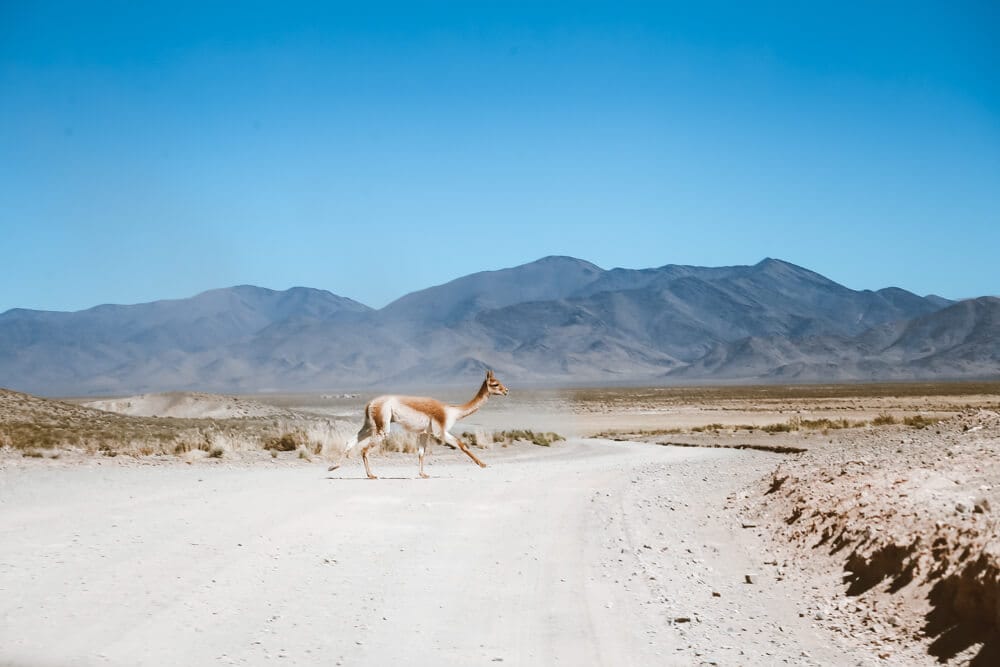
Speed Limits In Argentina
Argentina speed limits are easy to keep up with because they are generally set to the type of road you’re on.
Here is an overview, taken directly from the Argentine government’s website:
- Streets/Calles: 40 km/h.
- Avenues/Avenidas: 60 km/h.
- School zones & tunnels under train tracks: 20 km/h.
- Semihighways/Semiautopistas: 120 km/h.
- Highways/Autopistas: hasta 130 km/h.
- Rural areas/Zona rural: 110 km/h.
You May Also Like: All About Currency Exchange and Money in Argentina
Driving with Children & Babies
Children under 10 must sit in the backseat and if needed, must use a proper car seat.
Most rental agencies rent very old car seats and they’re only forward facing due to liability laws around infant car seats.
When my baby was under a year, we used the Doona Stroller/Car Seat as our main stroller.
For both babies the Doona made our lives so much easier, since taxis will never have a car seat (and lugging one around as I’ve seen some foreigners try to do is NOT practical).
If you plan on bringing your baby to Argentina, I highly, highly recommend bringing a Doona.
Strollers on buses need to be folded before you board (easy with a Doona, a huge hassle with a larger stroller), taxis will be safer, and you’ll be able to rent a car without any worries.
Now that my toddler is bigger, I just use whatever the rental agency offers.
But, yes, they are always old car seats. In Ushuaia, it was actually the old car seat of the rental company’s owner (used by her two kids before being handed down to the rentals).
If you feel unsure about the safety of a rental agency’s options, you can always invest in a compact travel car seat like this to bring your own.
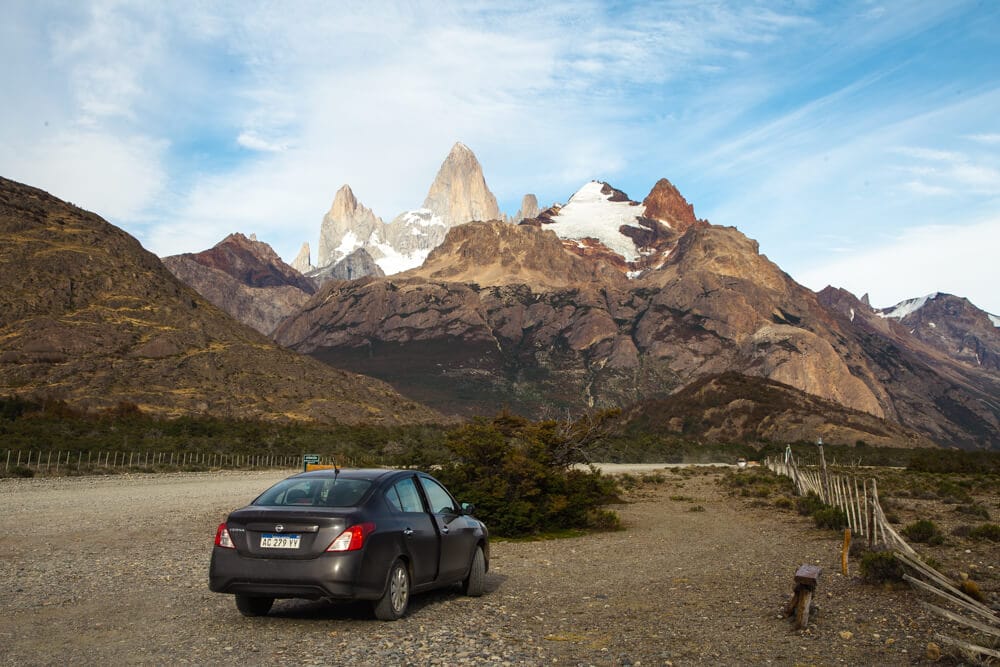
Police, Traffic Cameras & Fines
It’s highly unlikely that you’ll be pulled over in Argentina.
Most fines (and I’ve accumulated my fair share) come via traffic cameras.
When you’re using Google Maps, select the option to show all upcoming cameras.
The province of Buenos Aires is notorious for this. Villa La Angostura also recently installed cameras in 2025.
Cameras are often placed right after a decrease in the speed limit (this is how they get me, every single time).
The drive to Mar del Plata and the best beaches in Buenos Aires are littered with cameras, for example.
In other regions of the country, traffic stops are more common.
You’ll see police set up on the side of the highway, often at the entrance of town or provincial border crossing.
They’ll either wave you on or ask you to stop to review your documents.
Read Next: The Best Road Trips in Argentina
Always have all of your documentation in the vehicle: your license, insurance, and everything from the rental car agency. Your rental car agency will provide all of this in the glove compartment box.
I’ve been in many of these stops from Ushuaia to Jujuy and it’s never a problem, just a short delay.
They just want to confirm documentation and in some cases, make sure you don’t have certain items in the car (like fruit when crossing into fruit fly free Rio Negro).
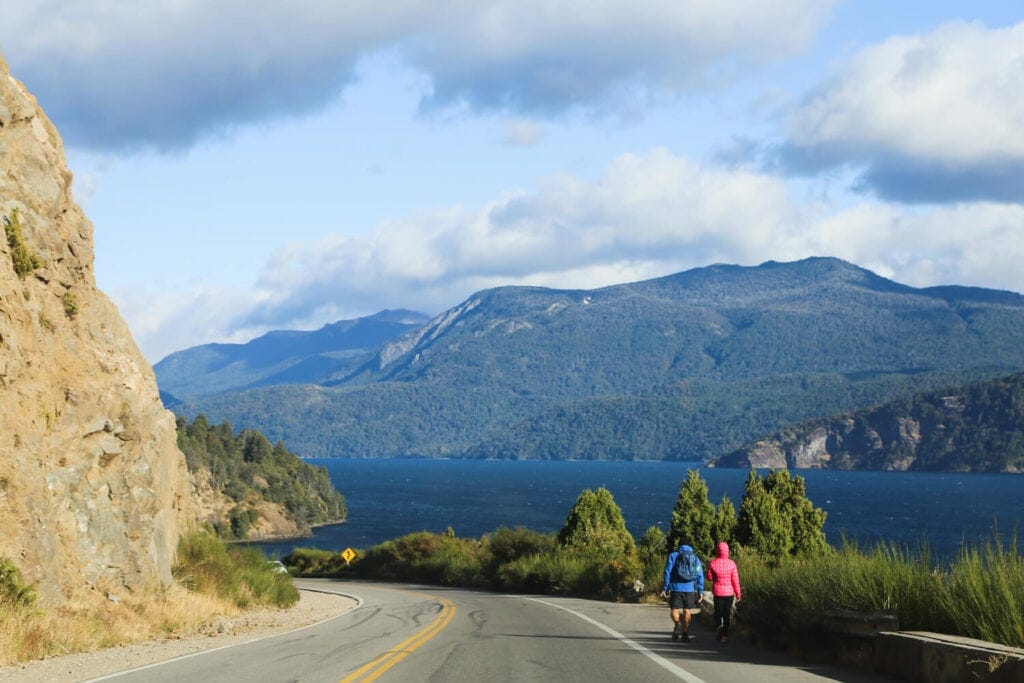
Driving in Argentina: A Summary
I hope this article has prepared you to hit the road in Argentina.
Because the scenic drives and road trips in Argentina are breathtaking and worth every penny of their overpriced rental cars.
If you have any questions or road trip memories to share, let me know in the comments! I always read them and always respond.
Read More: Argentina Road Trip Inspiration
- 10 Days in Argentina Itinerary – 7 Routes to Choose From
- Exploring Misiones: A Northeast Argentina Road Trip Itinerary
- Salta & Jujuy: A 9 Day Northwest Argentina Road Trip Itinerary
- The Perfect Salta Road Trip
- Quebrada de las Conchas: The Most Beautiful Drive in Salta
- Ruta de los Siete Lagos, Argentina: A Guide to 7 Lakes Route
Health Insurance Requirement
Foreign travelers are currently required to have travel medical insurance. While agents are still figuring out enforcement, they could deny you entry if you do not meet the requirement. Also, requirements aside, medical insurance is always a good idea when you travel.
SafetyWing’s Essential Plan meets all of the requirements Argentina is asking for (think hospital stays or antibiotics). It also covers lost luggage, travel delays and evacuations. Click here for more information to avoid future headaches.
Argentina Travel Resources
- BOOK A CONSULTATION | I offer one-on-one travel consultations to help you plan your trip to Argentina. Pick my brain to get a local’s insight. Click here for more information.
- ☕BUY ME A COFFEE | If you’ve enjoyed my blog and found it useful, you can buy me “virtual” coffee.
- MY MAP | Buy my interactive map with 300+ pins to have access to the city as I see it. It is an invaluable resource. See more here about how it works.
- AIRPORT TRANSFERS | Having a driver waiting for you is ideal for a stress free arrival, Cesar and his team here is the best option for a driver from Ezeiza or Aeroparque, they are my go-to airport ride!
- TRAVEL INSURANCE | Always travel insured. Anything can happen anywhere and it is scarier and costlier in an unfamiliar country. SafetyWing’s Essential Plan covers unexpected travel and medical emergencies and even offers add-ons like electronics theft or adventure sports. It is the best if you’re coming on vacation. If you’re coming as a digital nomad or an extended stay, you need their Complete Nomad Plan which also covers routine check ups, maternity, mental healthcare and more. Read more: Health Insurance in Argentina
- PHONE PLAN | These days, traveling with data is essential. Especially in Argentina where everything is managed on Instagram and WhatsApp. I recommend this E-SIM card. It’s hassle-free and affordable, for more read how to get an Argentina sim card.
- ACCOMMODATION IN ARGENTINA | booking.com is the most common hotel site used in Argentina and it’s where you’ll find the most options.
- RENTAL CARS | I love using Discover Cars, it is a great platform to compare different rates and providers and I find they have responsive customer service.
- BUS TICKETS | Check Busbud for long distance bus routes and tickets.
- VPN | If you’ll be using a public WiFi connection and want to secure your data, I highly recommend using a VPN, I personally use and have had a good experience with ExpressVPN. I also use it to access Hulu and American Netflix from Argentina.
- FLIGHTS | Always check Google Flights and Skyscanner for flights to and within Argentina. Aerolineas Argentina is the local airline with the most routes. FlyBondi and Jetsmart are two budget airlines with dirt-cheap prices (but expect to pay for every add-on like luggage).

Fabulous article! I’m just investigating a trip to Patagonia and excited about the possibilities. It seems you’ve answered many of my questions, and a few I hadn’t thought of. Thank you 🙂
Amazing, you’re going to have a wonderful trip!
A question or two Please…… I am Australian and am driving with an American guy USA to Ushuaia. It’s his vehicle and he wants to sell it if possible at the end but has very limited time. I cannot find any info on selling to a local, but there is info available on several blogs regarding a way to sell the vehicle to a foreigner. It seems finding a buyer is the hardest part. Obviously there are many more locals to find a buyer from, if the car can be sold to them. Also What happens if he just leaves the vehicle behind in a carpark and gets on a plane? Could he simply gift the vehicle to a local.?
Thank you in advance for any thoughts you might have.
I’m sorry I don’t know the intricacies of buying and selling a car here but I know it can be hard without a local DNI.
Not sure what happens if the car is abandoned but I’d say it’ll eventually get picked apart for parts ha